3 in 5 dog owners in the dark about pet’s POV
- 3 in 5 owners (61%) admit they don't know that colour affects how their dog behaves, with just 1 in 5 (21%) being aware they only see shades of blue and yellow.
- Despite British dog owners spending £2.4 billion a year on toys and enrichment, 1 in 6 (17%) feel guilty that they don’t provide pets with enough stimulation.
- This International Dog Day (26th August), Pet Behaviourist Hannah Molloy shares expert advice on how to stimulate and enrich a dog’s daily life.

3 in 5 dog owners in the dark about pet’s POV
- 3 in 5 owners (61%) admit they don't know that colour affects how their dog behaves, with just 1 in 5 (21%) being aware they only see shades of blue and yellow.
- Despite British dog owners spending £2.4 billion a year on toys and enrichment, 1 in 6 (17%) feel guilty that they don’t provide pets with enough stimulation.
- This International Dog Day (26th August), Pet Behaviourist Hannah Molloy shares expert advice on how to stimulate and enrich a dog’s daily life.
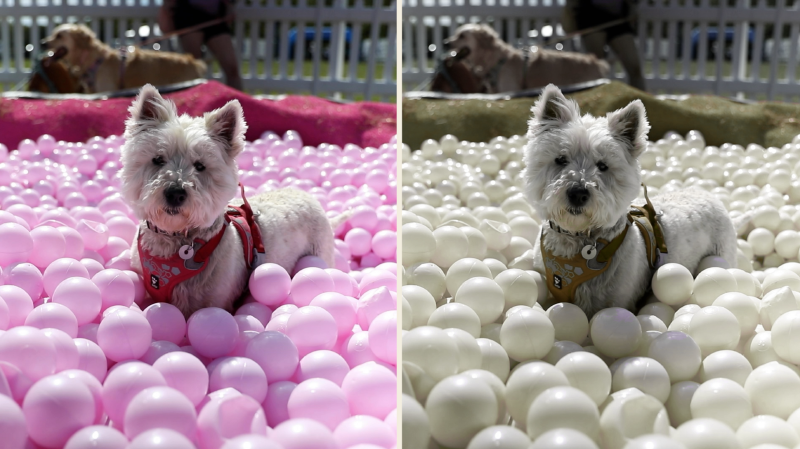
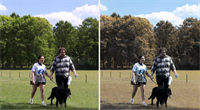
26 August 2025: For decades, many believed dogs saw the world only in shades of black and white – yet while experts now know dogs are red/green colourblind, only one in five (21%) pet owners are aware that their beloved pups actually see in shades of yellow and blue.
New research1 this International Dog Day (26th August) reveals that almost three in 10 (28%) dog owners incorrectly assume dogs see all the colours humans see, and one in six (16%) still believe in the old black and white myth.
The research, conducted by Agria Pet Insurance, revealed that while a dog’s eyes topped the chart as their owner’s best-loved feature, and even though 74% of owners would love to see the world through their dog's eyes, three in five (61%) don’t know that colour can affect how dogs behave, so aren’t taking advantage of its benefits.
Younger generations appear to know more about dog vision, with almost a third (30%) of Gen Z aware dogs can only see in blue and yellow. Older generations were less aware, with a fifth of Millennials (21%) and just one in six (17%) of Gen X able to specify dogs can see blue/yellow.
Interestingly, Northerners appear more knowledgeable – owners from Leeds and Manchester were the most clued in, with one in three (30% and 28% respectively) aware that dogs only see blue/yellow, while Bristol was the least aware, at 9%.

Despite their lack of knowledge, dog owners have good intentions when it comes to giving their pets a healthy lifestyle and enjoyable environment. After learning about dog vision, 69% said they would purchase toys, bedding or accessories in blue or yellow, with 78% admitting that they would be willing to spend more on items in colours their dog can see clearer.
In fact, with over 13 million dog owners in the UK2, Brits are collectively spending more than £2.4 billion a year on their dog’s toys, enrichment tools and activities. While dogs cost their owners £191 a year on average for these enrichment purchases, younger generations are spending more with those aged 25-34 dishing out £242 a year, compared to just £88 for owners over 55.
While well-being is important to owners, the data revealed that close to three in 10 (28%) wish they had more time or ideas for providing their dogs with enrichment.
Almost half (43%) worry their dog is bored or lacking in mental stimulation, and 17% feel guilty that they don’t do enough to mentally enrich their dog’s day-to-day life beyond meals and walks.
The average amount of time dog owners spend actively playing with or training their dog is just 41 minutes a day. Shockingly, nearly half (44%) only spend 15-30 minutes a day actively engaging with their pet in this way.
Women are more likely to take their dog on daily walks, play with toys and games, and visit dog-friendly locations with their pets, while men are more likely to use professional walking and daycare services, and take their dogs to organised activities like dog-friendly festivals, organised walks and breed meets.
One in 10 dog owners (9%) admit they hadn’t even thought about their dog’s mental stimulation before, suggesting a wider knowledge gap regarding the holistic well-being of pets.
Following its survey findings, Agria aims to educate dog owners on how their pets’ vision can influence their behaviour and interaction with their environment, so owners can create more enriching and enjoyable lifestyle for their animals.
 Louisa Lytton, Actor and Agria Ambassador said: “2025 is the year of wellness, so it’s fantastic that Agria is taking the opportunity to encourage owners to look at their pets’ holistic wellbeing. Pet enrichment is already a growing trend, and owners are seeking to improve their pets’ mental and emotional wellbeing, recognising that a pet’s needs extend beyond basic food and exercise. While this is great to see, it’s clear that we have a way to go in educating the public on their dogs’ most important sensory needs. The good intentions are there; now it’s time to spread the word.”
 Hannah Molloy, Applied Animal Behaviourist for Agria Pet Insurance commented, “Dogs experience the world in a very different way to us, and it’s super important to understand that so we can create enriching environments for them. Canine eyesight is fascinating. As well as their limited colour perception, seeing in shades of blue and yellow, dogs have a bigger field of vision than us. They can see 240° around them compared to our 180°. That means they’re super sensitive to movement, even when it happens behind them.
“Dogs also have an extraordinary sense of smell - which allows them to track people using footprints, tell the time, know when you’re coming home from work, and detect disease odour signatures. To put that into perspective – if we can smell a teaspoon of sugar in a cup of tea, dogs can smell one in two Olympic-sized swimming pools worth of water.
“With such amazing sensory abilities, it should come as no surprise that dogs need varied mental, physical and social enrichment on a daily basis. Positive sensory experiences can improve pets’ moods and behaviours, making for a better pet ownership experience for humans.”
Hannah’s expert tips for canine enrichment:
- Consider colour
Dogs lack red cones in their eyes, which are required to collect the red/orange colour spectrum – which is why they experience the world in shades of grey, blue and yellow. Consider buying toys, accessories and bedding in colours they can see more clearly, to enrich their environment at home and stimulate them during walks and playtime.
- Indulge their natural instincts
Certain behaviours are natural urges for dogs, even if they’re inconvenient for owners. Take digging, for example. If you don’t want your dog digging up your garden plants, rather than scold them for it, provide somewhere they are allowed to dig instead – like a sandpit. If your dog likes to rip toys and furniture, save old carboard packaging for them to play with instead.
- Give them choices
Just like humans, dogs like to have more than one option. While obedience is an important part of training, it’s also important to give your dog the freedom to choose what they want to do from time to time. This could be giving them more than one type of bed to choose from, in different places, or walking them off the lead or on a long line so they can choose the direction you go.
- Mix up their dinners
Imagine eating the exact same meal every day – you’d get pretty bored. Dogs are the same. Try mixing it up with different textures, tastes, smells and temperatures, using fresh food options like eggs and vegetables to enrich mealtimes.
- Let them sniff
Sniffing isn’t just enjoyable for dogs, it’s also a form of exercise. When dogs are resting, they breathe 15 reps/minute, when they’re walking it rises to 30, while running it’s 60, and when sniffing, it’s up to 200 reps/minute. For a dog, 25 minutes of sniffing can be as exhausting as a 90-minute cardio walk. While it can be time-consuming to take time out of a walk to let your dog sniff at will, it’s well worth doing as it exercises their instinct, their breathing, and their mind.
- Make time for socialising
Just like you enjoy hanging out with friends, dogs have a social drive too. You should help them build bonds with two to three dogs they can see regularly. Even if they don’t seem to actively play or even greet each other, walking together and sniffing together is satisfying for them, and they will bond and relax together over time.
- Avoid ‘quick fix’ solutions
Many brands advertise scented plugs or spray bottles supposedly designed to engage pets’ senses or even advertised to calm pet anxiety. I recommend avoiding these, as no two dogs react the same, and they can actually cause more stress than they prevent. Dogs’ noses are so sensitive that these supposed ‘quick fix solutions’ can really overwhelm them and block the sense of smell that they rely on so heavily to navigate their world.
Visit agriapet.co.uk for more information on pet enrichment, and how dogs see the world.
ENDS
References:
[1] Research Survey conducted by Agria Pet Insurance, with 1,000 dog owners. August 2025.
[2] The Independent, February 2025.
Media Enquiries:
Contact the GOLD79 team at agria@gold79.co.uk
About Agria Pet Insurance
Agria is one of the world’s leading animal insurers, specialising in small animal and equine insurance. Founded in Sweden over 130 years ago, Agria began underwriting policies in the UK in 2009 and is now a prominent part of the UK animal insurance sector. Agria is the only provider of lifetime equine insurance in the UK and has been protecting horses here since 2022.
In the UK, Agria works with over 60,000 vets, breeders and rehoming organisations, delivering a welfare-led approach to specialist, lifetime insurance. Agria also administers pet insurance schemes for the leading small animal registration bodies, The Kennel Club, and the Governing Council of the Cat Fancy (GCCF), and protects assistance dogs as they go about their day-to-day duties.
Agria's Lifetime Premium Cat & Dog policies are the Which? 2024 highest scoring Pet Insurance Best Buys, and in July 2025 Agria achieved a perfect score of 100/100 to lead the GOOD Shopping Guide's Ethical Pet Insurance Table.
For more information, see www.agriapet.co.uk / www.kcinsurance.co.uk / www.gccfinsurance.co.uk / https://www.instagram.com/agriapetinsurance / https://www.facebook.com/agriapetuk