
‘A “fit for all” pace for the energy transition is unrealistic and unfair’
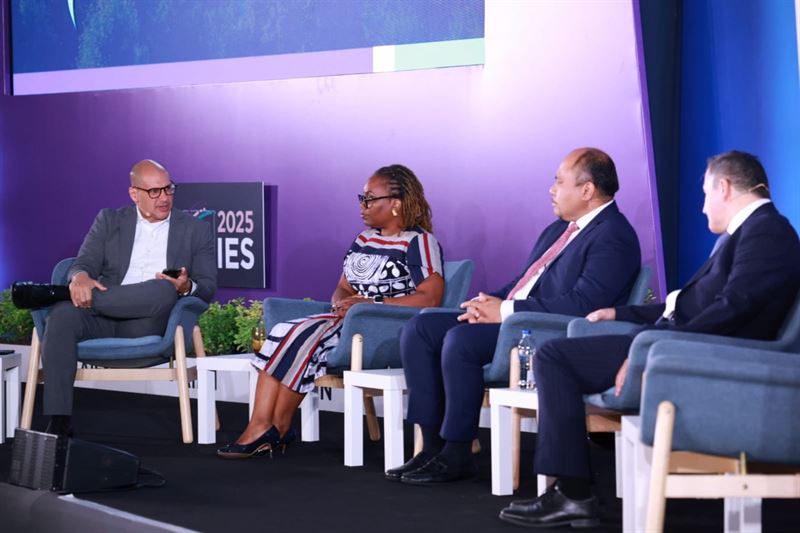
In the panel session ‘Balancing Energy Challenges in Developing Nations’ at this year’s AIEN International Energy Summit, moderator Giovani Loss, Partner, Mattos Filho, started the session with some troubling statistics – globally, 733m people lack access to electricity. And 2.3bn – 30% of the world’s population – lack access to clean cooking. So from a developing nation’s point of view, what are the main challenges of energy infrastructure and security?
Sotonye Pinnick, Managing Director, NNPC Energy Services Limited (EnServ), said: ‘This is very typical for Nigeria. We have vast resources and are keen to harness the potential due to energy poverty in the country. The main challenges are related to limited access to critical infrastructure, competing fiscals and being able to unlock the resources due to limited investment.
‘We have an overreliance on importing petroleum products as our refining capacity is low. Added to this we have limited network connectivity, ageing infrastructure, and pipeline insecurity. In the midst of this we need to make sure our fiscals are competitive while guaranteeing energy independence and economic stability.’
Giovanni then asked what governments could do to help attract investment.
Razman Hashim, Senior Vice President Group Legal & Group General Counsel, Petronas, said: ‘Attracting investment into renewables is the very essence of the energy trilemma balance. Many countries still rely a lot on fossil fuels. For example, Malaysia has pledged 23% renewables by 2050, but we’re currently at 4%. It’s a huge ask! There are tax incentives by the government, but a lot of funding is needed to achieve this. If you want to transition, you have to partner with other countries, we cannot do it alone.’
Looking at the energy transition, the panel was asked if the pace was too quick and if there should be different timelines for developing and developed nations.
Razman asked ‘are we talking 2050 or 2070? There are different views on this and for each country it will be different. For some countries that are more blessed with renewables it will be quicker.’
Mehrdad Molaei, Senior Legal Counsel, SLB, added: ‘I am happy we are talking about 2070, it is much more realistic. Unless some miracle technology appears overnight, 2050 isn’t as likely. And in terms of the timeline, setting a “fit for all” pace is unrealistic and unfair, and I am pleased this is being recognized by the international community.’
Sotonye added: ‘We have different realities. The West is far ahead of us in terms of access to finance and technology. We need a just transition that lets us commit and invest.
Mehrdad concluded: ‘We need to make sure we are not diluting our sustainability objectives while still using hydrocarbons. The pathway isn’t binary – we don’t have to choose between access and decarbonization. Wider availability mustn’t come at the expense of net zero ambitions – we must be able to do both.’
Tags: