
Better cancer care on the horizon thanks to new blood analysis method
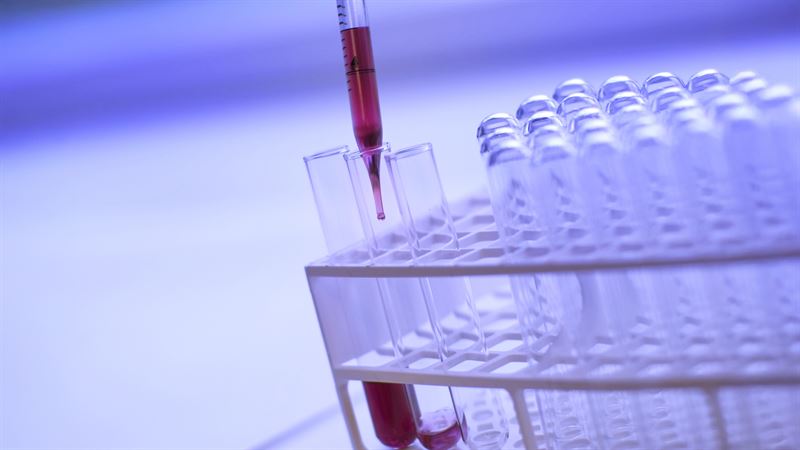
Blood tests have proved to be a promising tool for detecting and monitoring cancer. Researchers at Chalmers University of Technology and the University of Gothenburg, Sweden, have now developed a new method that makes it possible to analyse samples containing as little as 5 per cent cancer DNA in the blood, compared with the 15–20 per cent required today. This method could lead to better cancer care and improved monitoring of tumour progression.
Analysing changes in tumour DNA using blood tests is a technique that is being explored in several clinical trials worldwide. Current analytical methods work well when the amount of cancer DNA is relatively high, at around 15–20 per cent of the total DNA in the blood. However, the level of cancer DNA is often considerably lower than this. This may mean that the sample quality is not good enough for detailed analysis.
‘We wanted to develop a method that works particularly well in difficult cases where there is very little cancer DNA in the blood and a lot of what we consider noise – that is, mainly healthy DNA. Our results show that the new method performs better with samples involving low levels of cancer DNA, where the proportion is around 5 per cent. So, it works exactly as we had hoped,’ says Lotta Eriksson, a doctoral student in the Department of Mathematical Sciences at Chalmers and the University of Gothenburg.
Better monitoring and individually tailored treatment
Blood-based methods being tested in clinical trials are often used to determine whether cancer can be detected at all. It is difficult to obtain a more detailed picture, partly due to high costs and poor sample quality.
The new method, BayesCNA, can extract information that was previously hidden in low-quality samples and provide more detail about the tumour’s composition. This can help to provide a better understanding of how a patient’s cancer changes over time.
‘When the treatment is effective, the amount of cancer DNA in the blood drops significantly. This makes it more difficult both to detect the cancer and to monitor how it changes. It is important to be able to analyse samples containing low levels of cancer DNA to gain a clearer picture of how a patient responds to treatment,’ says Eszter Lakatos, Assistant Professor in the Department of Mathematical Sciences at Chalmers and the University of Gothenburg.
At present, a tissue sample from the tumour itself is required to obtain detailed information about its composition. The ability to monitor tumour progression using blood tests could lead to significantly better care for cancer patients.
‘A patient may undergo surgery once or twice, whereas blood tests may be taken at intervals of just a few weeks during treatment. If we can obtain information about tumour changes from the samples, we can monitor developments much more closely and see what happens between treatment sessions. This can help doctors make more informed decisions, such as tailoring treatment to the tumour’s composition,’ says Eszter Lakatos.
A statistical method that amplifies weak signals
The method has been developed to analyse data from what is known as low-pass whole-genome sequencing, a technique that provides a general overview of the DNA structure. The technique has major financial benefits but provides limited information because the data quality is poor.
‘You could compare it to skimming through a book rather than reading it properly. We get an overview of the DNA structure, but not a detailed picture,’ says Eszter Lakatos.
The new analysis method uses a statistical algorithm to amplify the very weak signals present in this type of sample.
‘Nowadays, machine learning is used to solve a great many problems, and we tried those methods first. But, to our surprise, it turned out that classical statistics worked better in this case, which was particularly pleasing to us mathematicians and statisticians,’ says Lotta Eriksson.
Aiming for clinical trials
The next step is to analyse the information the method provides on tumour composition. The researchers are keen to develop a further method for identifying the hidden characteristics of the cancer that influence how patients respond to treatment.
‘If we can demonstrate that this information is useful, we hope it will lead to more collaborations and wider adoption of our method within the research community. In the long term, I hope that the methods we develop can be used in clinical trials and, with any luck, make a difference to the care of cancer patients,’ says Eszter Lakatos.
More about the research:
The article ‘Sensitive detection of copy number alterations in low-pass liquid biopsy sequencing data’ has been published in the journal Briefings in Bioinformatics. The authors of the study are Lotta Eriksson and Eszter Lakatos, both of whom are currently in the Department of Mathematical Sciences at Chalmers University of Technology and the University of Gothenburg, Sweden
The study was funded by the Swedish Research Council and Chalmers’ Health Engineering Area of Advance.
For more information, please contact:
Eszter Lakatos, Assistant Professor, Department of Mathematical Sciences at Chalmers University of Technology and the University of Gothenburg, Sweden, eszter.lakatos@chalmers.se, +46 31 772 18 16
Lotta Eriksson, Doctoral student, Department of Mathematical Sciences at Chalmers University of Technology and the University of Gothenburg, Sweden, lottaer@chalmers.se, +46 31 772 53 76
Eszter Lakatos speaks English and Hungarian. Lotta Eriksson speaks English and Swedish. At Chalmers, we have podcast studios and filming equipment on-site and can assist with requests for TV, radio, or podcast interviews.
Mia Halleröd Palmgren
Press Officer
+46 31 772 32 52
mia.hallerodpalmgren@chalmers.se
________________
Chalmers University of Technology in Gothenburg, Sweden, conducts research and education in technology and natural sciences at a high international level. The university has 3100 employees and 10,000 students, and offers education in engineering, science, maritime studies and architecture.
With scientific excellence as a basis, Chalmers promotes knowledge and technical solutions for a sustainable world. Through global commitment and entrepreneurship, we foster an innovative spirit, in close collaboration with wider society.
Chalmers was founded in 1829 and has the same motto today as it did then: Avancez – forward.
---
Images provided in Chalmers University of Technology press releases are, unless specified otherwise, free for download and publication as long as credit is given to the University and the individual creator. Cropping and rescaling of the images is permitted when required for adaptation to the publication’s format, but modifications that would influence the message and content of the original are not. The material is primarily intended for journalistic and informative use, to assist in communication and coverage of Chalmers’ research and education. Commercial usage, for example the marketing of goods and services, is not permitted.
We kindly request credit to be given in the following format where possible:
Image/Graphic/Illustration: Chalmers University of Technology | Name Surname