
Volvo Cars celebrates four million cars produced on SPA architecture
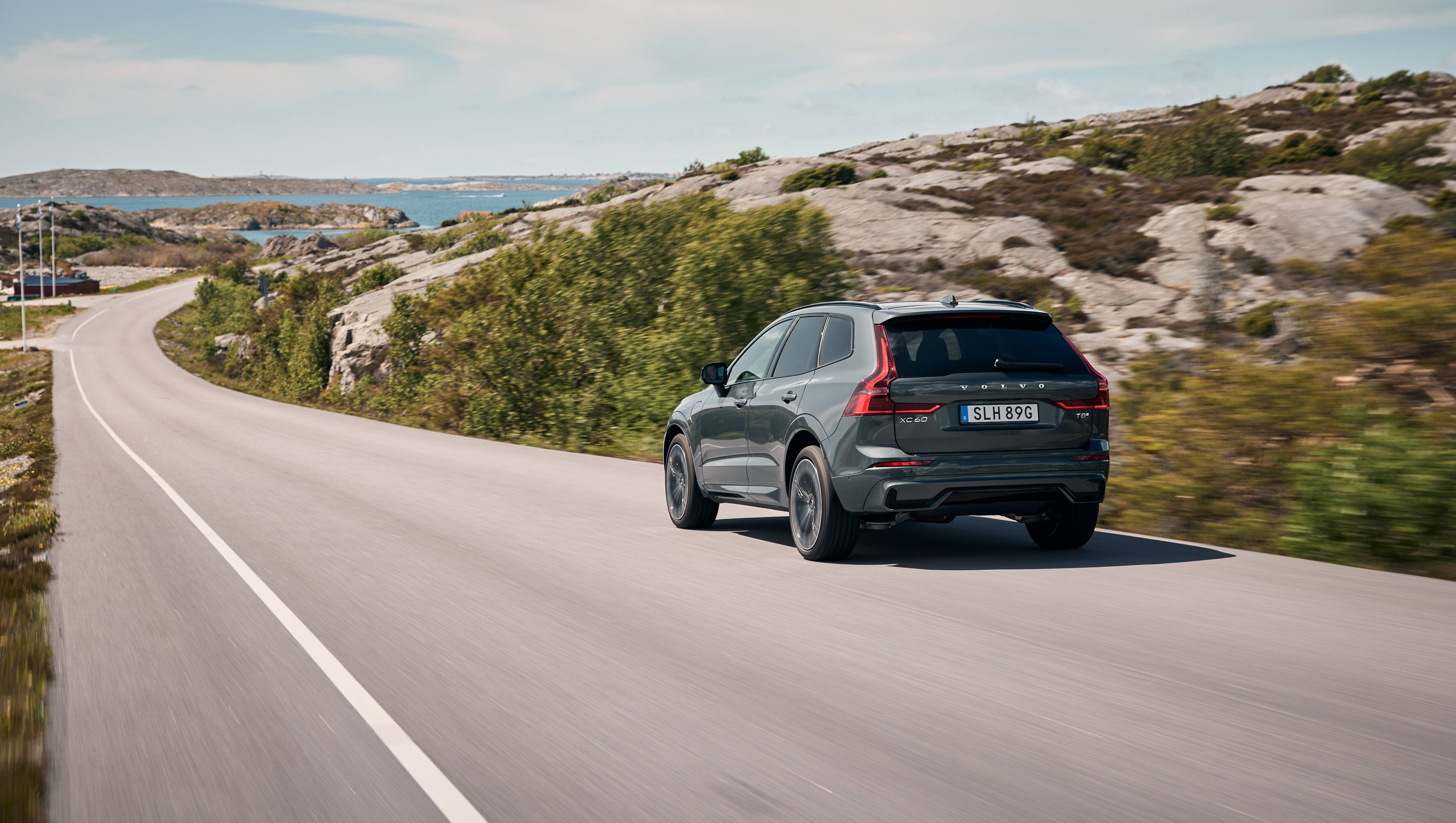
Volvo Cars has built the four millionth car on its groundbreaking first-generation Scalable Product Architecture* (SPA). Debuting in 2014 with the second-generation Volvo XC90, SPA laid the foundation for the modern Volvo brand of today. It transformed the company’s production by allowing diverse models, powertrains, and technologies to be built on a shared architecture and assembly line, significantly cutting costs.
SPA is the product of a proudly Swedish-led R&D effort, designed and developed in-house. Since its inception, it has underpinned six different models, produced across three continents and in four countries: Belgium, China, Sweden and the US.
The milestone car, a Volvo XC90, recently rolled off the production line at the company’s plant in Sweden.
“SPA spearheaded our company’s rebirth as a modern and premium brand,” says Michael Fleiss, chief strategy and product officer of Volvo Cars. “To this day, it remains the foundation for some of the most successful Volvo models in history and it continues to reach new heights as we further improve on it.”
As Volvo Cars celebrates this milestone, the company also highlights the many benefits that the flexibility of SPA has delivered to customers worldwide.
SPA introduced several world-first safety features that helped make the XC90 and later models some of the safest cars in the world. The list includes features such as the run-off road protection package, and the auto brake function at intersections. Another example is the safety cage, which was further improved thanks to an increased use of high-strength boron steel. Many of these features continue to be enhanced, ensuring that Volvo customers benefit from them – both now and in the future.
In addition, the platform gave the design team greater creative freedom, resulting in the striking and now-signature ‘Thor’s Hammer’ running lights. It also introduced the groundbreaking ‘Twin Engine’, a combination of petrol power and electric propulsion that is still being used in Volvo’s plug-in hybrid models today.
Looking ahead, key insights from SPA will be carried forward into the SPA2 and upcoming SPA3 platforms, continuing to shape and power the Volvo cars of tomorrow. And with over-the-air software updates, many of the SPA-based cars on the road continue to receive upgrades to this day, free of charge.
The small print
*Refers to first-generation SPA platform only and does not include cars produced on SPA2 platform.
The Volvo XC60, the company’s current best-selling model, is based on the first-generation SPA platform, with additional production set to begin at the Charleston plant in the US next year. The other current models produced on the platform are the S60, V60, S90 and XC90.
Weitere Informationen finden Sie im Volvo Cars Newsroom.
Simon Krappl
Volvo Cars im Geschäftsjahr 2024
Für das Gesamtjahr 2024 verzeichnete die Volvo Car Group einen rekordverdächtigen Kernbetriebsgewinn von 27 Milliarden SEK. Der Umsatz stieg 2024 auf ein Allzeithoch von 400,2 Milliarden SEK, der weltweite Absatz erreichte die Rekordzahl von 763 389 Fahrzeugen.
Über die Volvo Car Group
Volvo Cars wurde 1927 gegründet. Heute ist es eine der bekanntesten und renommiertesten Fahrzeugmarken der Welt und verkauft in mehr als 100 Ländern Fahrzeuge an Kunden. Volvo Cars ist an der Nasdaq Stockholm notiert und wird unter dem Börsenkürzel «VOLCAR B» gehandelt.
«Für das Leben. Wir möchten dir die Freiheit geben, individuell, nachhaltig und sicher unterwegs zu sein.» Dies zeigt sich am Ziel von Volvo Cars, ausschliesslich vollelektrische Fahrzeuge anzubieten, und in der Verpflichtung zur ständigen Reduzierung des CO2-Fussabdrucks, mit dem ambitionierten Ziel, bis 2040 Netto-Null-Treibhausgasemissionen zu erreichen.
Per Dezember 2024 beschäftigte Volvo Cars rund 42 600 Mitarbeitende in Vollzeit. Die Zentrale, die Produktentwicklung, das Marketing und die Verwaltungsabteilungen von Volvo Cars sind grösstenteils im schwedischen Göteborg angesiedelt. Die Produktionswerke befinden sich in Göteborg, Gent (Belgien), South Carolina (USA), Chengdu, Daquing und Taizhou (China). Das Unternehmen betreibt zudem R&D- und Designzentren in Göteborg und Schanghai (China).