
Volvo Cars celebrates four million cars produced on SPA architecture
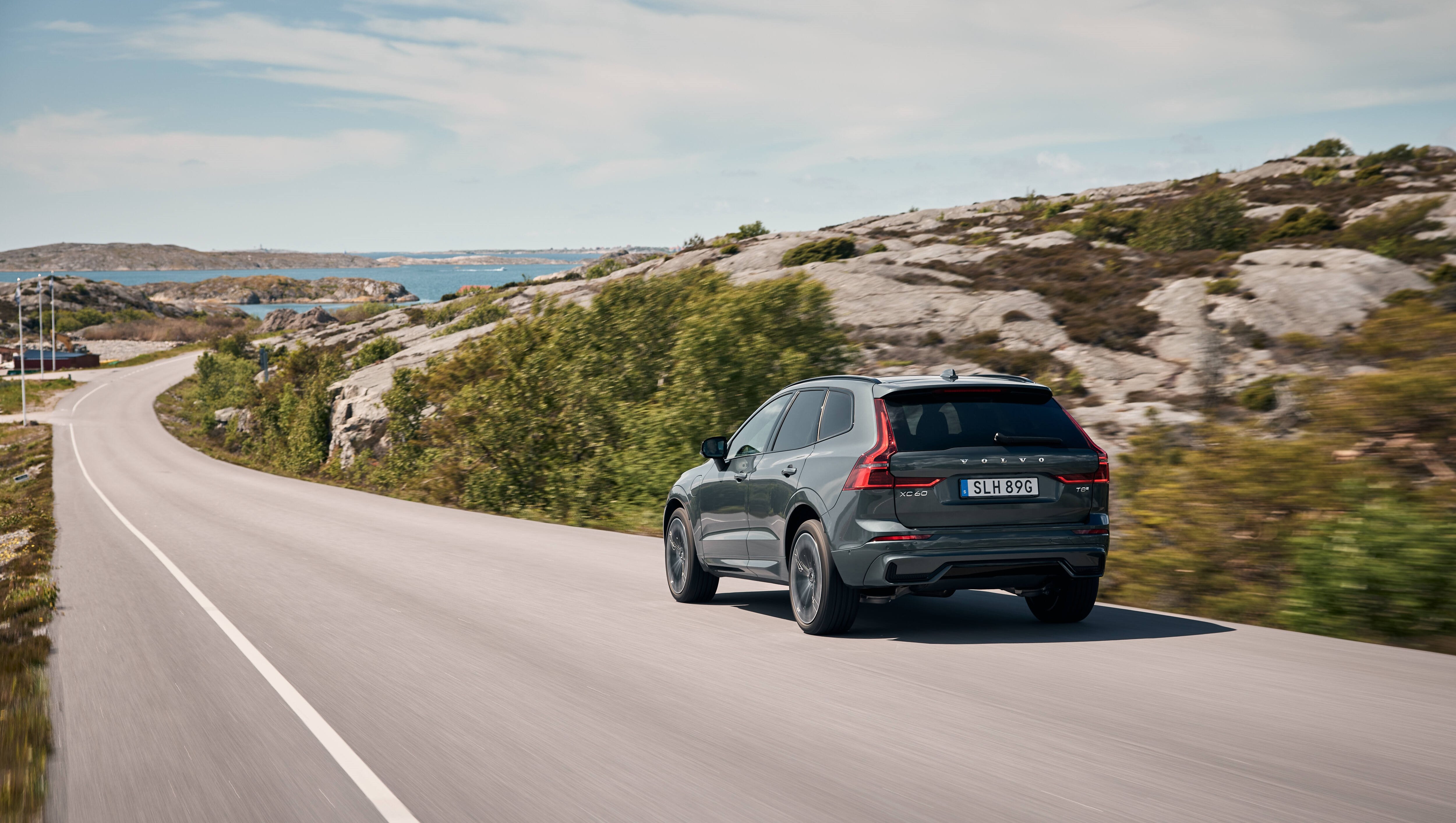
Volvo Cars has built the four millionth car on its groundbreaking first-generation Scalable Product Architecture* (SPA). Debuting in 2014 with the second-generation Volvo XC90, SPA laid the foundation for the modern Volvo brand of today. It transformed the company’s production by allowing diverse models, powertrains, and technologies to be built on a shared architecture and assembly line, significantly cutting costs.
SPA is the product of a proudly Swedish-led R&D effort, designed and developed in-house. Since its inception, it has underpinned six different models, produced across three continents and in four countries: Belgium, China, Sweden and the US.
The milestone car, a Volvo XC90, recently rolled off the production line at the company’s plant in Sweden.
“SPA spearheaded our company’s rebirth as a modern and premium brand,” says Michael Fleiss, chief strategy and product officer of Volvo Cars. “To this day, it remains the foundation for some of the most successful Volvo models in history and it continues to reach new heights as we further improve on it.”
As Volvo Cars celebrates this milestone, the company also highlights the many benefits that the flexibility of SPA has delivered to customers worldwide.
SPA introduced several world-first safety features that helped make the XC90 and later models some of the safest cars in the world. The list includes features such as the run-off road protection package, and the auto brake function at intersections. Another example is the safety cage, which was further improved thanks to an increased use of high-strength boron steel. Many of these features continue to be enhanced, ensuring that Volvo customers benefit from them – both now and in the future.
In addition, the platform gave the design team greater creative freedom, resulting in the striking and now-signature ‘Thor’s Hammer’ running lights. It also introduced the groundbreaking ‘Twin Engine’, a combination of petrol power and electric propulsion that is still being used in Volvo’s plug-in hybrid models today.
Looking ahead, key insights from SPA will be carried forward into the SPA2 and upcoming SPA3 platforms, continuing to shape and power the Volvo cars of tomorrow. And with over-the-air software updates, many of the SPA-based cars on the road continue to receive upgrades to this day, free of charge.
The small print
*Refers to first-generation SPA platform only and does not include cars produced on SPA2 platform.
The Volvo XC60, the company’s current best-selling model, is based on the first-generation SPA platform, with additional production set to begin at the Charleston plant in the US next year. The other current models produced on the platform are the S60, V60, S90 and XC90.
Pour plus d'informations, veuillez consulter le Volvo Cars Newsroom.
Simon Krappl
Volvo Cars en 2024
Pour l’ensemble de l’année 2024, Volvo Car Group a enregistré un résultat d’exploitation de base record, atteignant 27 milliards de SEK. Le chiffre d’affaires de l’exercice 2024 s’élève à 400,2 milliards de SEK, soit le niveau le plus élevé de l’histoire de l’entreprise, tandis que les ventes mondiales ont atteint le chiffre record de 763 389 véhicules.
À propos de Volvo Car Group
Volvo Cars a été fondée en 1927. Aujourd’hui, c’est l’une des marques automobiles les plus connues et respectées au monde, qui vend des véhicules dans plus de 100 pays. Volvo Cars est cotée au Nasdaq de Stockholm, où elle se négocie sous le ticker «VOLCAR B».
«Pour la vie. Donner aux gens la liberté de se déplacer de manière personnalisée, durable et sûre.» Cette raison d’être se reflète dans l’ambition de Volvo Cars de devenir un constructeur vendant uniquement des véhicules 100% électriques et dans son engagement à réduire en permanence son empreinte carbone, avec comme objectif de réduire à zéro les émissions de gaz à effet de serre d’ici à 2040.
En décembre 2024, Volvo Cars comptait environ 42 600 employés à temps plein. Le siège social, le développement produit, le marketing et l’administration de Volvo Cars sont principalement situés à Göteborg, en Suède. Les usines de production de Volvo Cars sont situées à Göteborg, Gand (Belgique), en Caroline du Sud (États-Unis), à Chengdu, Daqing et Taizhou (Chine). La société possède également des centres de R&D et de conception à Göteborg et Shanghai (Chine).