“German Peace Prize for Photography 2025” and “Felix Schoeller Photo Award 2025”
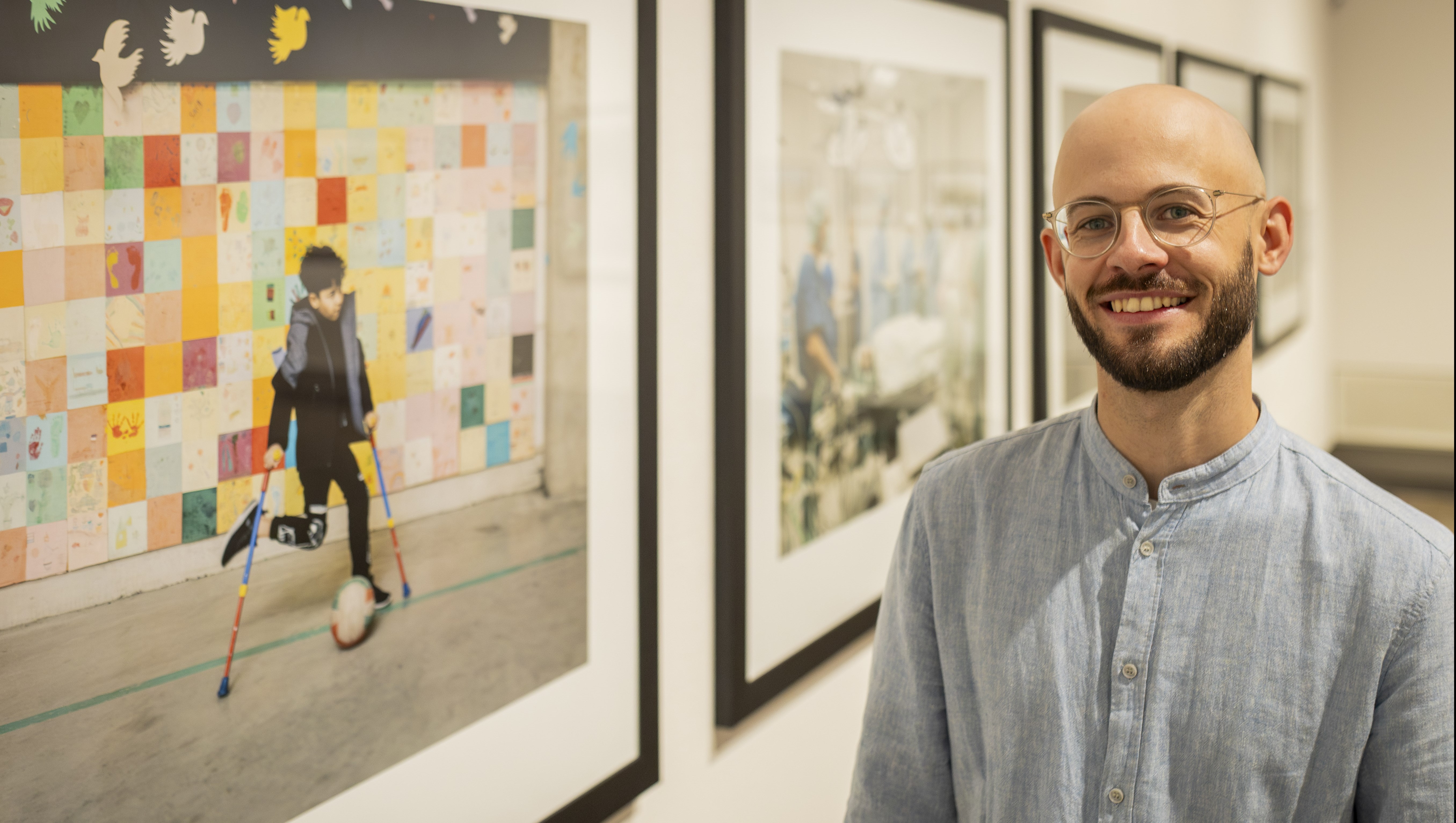
Maximilian Mann receives the 4th German Peace Prize for Photography in Osnabrück
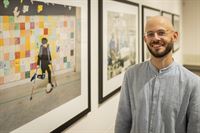
Photographer Maximilian Mann (Germany) has been awarded the “German Peace Prize for Photography” by the city of Osnabrück and the international company Felix Schoeller, headquartered in Osnabrück. The prize is endowed with 10,000 euros. Maximilian Mann prevailed against high-caliber international competition from 88 countries with his work “Letzte Rettung Oberhausen” (Last Rescue Oberhausen).
This year, the Felix Schoeller Photo Award was presented in two categories, each with prize money of €5,000. In the “Sustainability” category, the prize was awarded to Axel Javier Sulzbacher. Sulzbacher, a German-Mexican photojournalist born in Hanover in 1992, impressed the jury with his series “Green Dystopia.”
The Felix Schoeller Photo Award in the “Young Talent” category went to Verdiana Albano, an Afro-European artist living in Frankfurt and Berlin, for her work “i ain't from no east coast.” The Young Talent Award honors talented young photographers who are producing promising work.
The winning series, as well as the works of the nominees for both awards, will be presented in an exhibition at the Museumsquartier Osnabrück until February 22, 2026.
The fourth edition of the German Peace Prize for Photography
For the fourth time, the city of Osnabrück and Felix Schoeller have awarded the German Peace Prize for Photography, which was established in 2019. The initiators created the prize based on the city's unique history and Felix Schoeller's close connection to photography. As the site of the Peace of Westphalia in 1648, Osnabrück sees its history as an obligation to engage in peace policy. With its 130-year tradition in the manufacture of photographic paper and other high-quality specialty papers, Felix Schoeller continues to attach great social value to photography because of its authenticity.
German Peace Prize for Photography awarded to Maximilian Mann
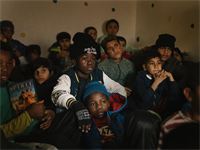
In his work “Letzte Rettung Oberhausen” (Last Resort Oberhausen), Maximilian Mann reports on a special place in the Ruhr region where the global crises and conflicts of this world take on a frightening proximity: the Peace Village Oberhausen. Here, the consequences of war and violence are manifested in faces marked by burn scars, injuries, and pain. These are the faces of children who are not yet teenagers and yet have already been through the worst.
But this place is not one of resignation, but of new beginnings. Thanks to medical care and the commitment of volunteer doctors, the children not only receive physical healing, but also a perspective—a moment of carefree laughter, a step back into life.
Maximilian Mann, born in 1992, is a German photographer with a master's degree in photography from Dortmund University of Applied Sciences. He specializes in documentary and portrait photography and focuses on stories that deal with social and environmental change as well as broader social issues. He was awarded the World Press Photo Award 2020. He is a founding member of the DOCKS collective, represented by the LAIF Agency, and an appointed member of the DGPh (German Society for Photography).
Comments on the award
Katharina Pötter, Mayor of Osnabrück: "The German Peace Prize for Photography reminds us that peace is not only about treaties or political agreements, but also about our willingness to embrace diversity, listen to other people's stories, and critically question our own worldview. Photography opens up spaces for encounter, exchange, and dialogue—and thus, in the best case, contributes to making peace possible."
Wolfgang Beckermann, First City Councilor of the City of Osnabrück: "As a city of peace, Osnabrück has a special responsibility to address issues of war, violence, and reconciliation. Photography can open doors in this regard because it makes visible what words alone often cannot achieve. A peace prize for photography from Osnabrück reinforces this perspective: it honors photographers who use their images to inspire empathy and spread the vision of a more peaceful coexistence throughout the world."
Simone Klein, chair of the jury: "Maximilian Mann focuses on those who suffer most in global refugee and crisis situations: children. His photographs show not only the scars of war and violence, but also the deep vulnerability of a generation that is in danger of losing its childhood through loss, fear, and injury. At the same time, Mann opens up a space for hope. He documents the medical care and solidarity experienced at the Peace Village in Oberhausen and shows that even in the midst of great hardship, moments of healing, dignity, and new beginnings are possible. With his sensitive visual language, he succeeds in arousing empathy and impressively illustrating the socio-political urgency of humanity and responsibility."
Hans-Christoph Gallenkamp, CEO of Felix Schoeller: "As a leading award, the German Peace Prize for Photography fits very well into our overall commitment to the Felix Schoeller Photo Award. With the Peace Prize, we as a globally active company are drawing attention to the terrible consequences of war and conflict. We appeal to all warring parties in all conflicts around the world to resolve them quickly and sustainably. We see our commitment as an obligation and a matter close to our hearts."
Nominees for the 2025 German Peace Prize for Photography present their work
Fabian Ritter
Youth of Ukraine
"How does it feel to be a young person living for weeks, months, and years in a country where there is a war with no end in sight? How do you grow up in a country where air raids are part of everyday life?
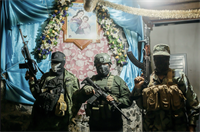
The work “Youth of Ukraine” (2022-2025) is an intimate insight into the everyday life and emotional worlds of young Ukrainians in times of war. Hope, fears, and the longing for a normal life accompany young Ukrainians every day.
In this formative phase of their lives, in which they are confronted daily with the effects, challenges, losses, and dangers of war, this long-term photographic project provides an intimate insight into their daily experiences.
Maryam Firuzi
In the shadows of silent women
"I come from a family torn apart by war. My parents were forced to leave their city during the Iran-Iraq War, and their family settled in various cities in Iran and around the world. I was born in the middle of the war, so I never experienced family reunions. That's why I set out to find my roots as an Iranian woman in this project. I traveled more than 50,000 kilometers in different parts of Iran to find women living in intertwined communities. A journey into the history of Iranian women's lives, which is a combination of tradition and patriarchy and, at the same time, linguistic and cultural diversity. Some of these women are the last generation and even the last family working by communicating directly with nature and transforming their suffering into products that speak of freshness, beauty, and sustainability."
Valentina Sinis,
Were Afghan Women to Unveil Their Tales
“Were Afghan Women to Unveil Their Tales” is a project that provides an accurate and respectful insight into the lives of Afghan women and shows what they go through in a difficult reality. Afghanistan faces many problems today, and one of the most serious is the loss of women's rights and freedoms.
Since the Taliban regained power, over 70 rules have been enacted to restrict women's access to education, work, healthcare, and freedom of movement. This harsh environment has greatly worsened the lives of Afghan women, as their own accounts and reports show. These restrictions affect women everywhere, from public spaces to their own homes, where they face daily limitations on their freedom of movement, opportunities, and even small decisions.
Nevertheless, Afghan women continue to show incredible strength. Their daily decisions—such as leaving the house, running businesses, or organizing in their communities – are acts of courage. These actions demonstrate a deep determination to preserve their identity in a society that seeks to restrict their freedom.
Silke Koch
Archive of the Unseen
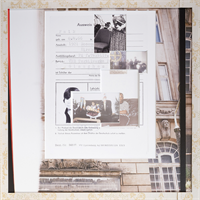
“Archive of the Unseen”: Our perception of wars and conflicts is usually not shaped by our own experiences, but from a distance, through media coverage. An important part of this is photographs/films and content for cultural visual memory. How can creative people draw attention to cultural treasures that are not visible due to war? How can a counterpart to the disappearance of an identity-forming cultural memory be initiated?
I would like to create an image and text archive of hidden monuments in public spaces in Kiev. The project will be launched in collaboration with my NGO partner, and cultural figures and monument conservators will be invited to contribute content to the archive. As a series of postcards, these can be presented in different contexts, viewed by MANY people, kept, and sent. Across national borders. 'Archive of the Unseen' stands for the preservation of European cultural heritage and against destruction, offering the public a variety of spaces for reflection.
The jury for the German Peace Prize for Photography
Simone Klein is an art advisor and independent, publicly appointed, and sworn expert for photography in Cologne. She is a member of the executive board of the German Photographic Society (DGPh).
Cathérine Hug completed her studies in art history, computer science, and journalism. She has been a curator at the Kunsthaus Zürich since 2013. In 2019 and 2020, Hug was included in the magazine Women in Business's list of the top 100 women in Switzerland in business, science, culture, media, digital, and startups.
Hannah Schuh has been working as visual director at ART – Das Kunstmagazin since 2013. After studying photography at the Royal Academy of Arts in The Hague, she began her training as a picture editor at ZEIT. She worked as a freelance photographer and picture editor at ZEIT and Tempus Corporate.
Nils-Arne Kässens is director of the Museum Quarter Osnabrück. He was brought to the museum at the end of 2016 with the concept of “Museum as a Peace Laboratory.”
Ulrich Schneckener has been Professor of International Relations & Peace and Conflict Studies at the University of Osnabrück since 2009. Since 2016, he has been Chairman of the Board of the German Foundation for Peace Research (DSF).
Image credits
© Maximilian Mann, winner of the German Peace Prize for Photography, “Letzte Rettung Oberhausen” (Last Rescue Oberhausen)
Further information, as well as all other winners and nominees, can be found at www.felix-schoeller-photoaward.com
Osnabrück Museum Quarter
Lotter Straße 2, 49078 Osnabrück
www.museumsquartier-osnabrueck.de
Opening hours:
Tue – Fri 11 a.m. – 6 p.m.,
Sat/Sun 10 a.m. – 6 p.m.
Media Contact:
Claudia Drecksträter
T.: 0541 323 4581
M.: 0151 11 700 198
dreckstraeter@osnabrueck.de