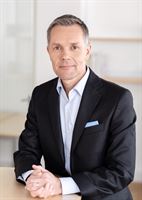
Finnfund's Jussi Tourunen: "Energy solutions impact our planet's future—Planetary boundaries now guide investment decisions"
Investing in energy has become an increasingly central theme for development finance institutions such as the state-owned impact investor Finnfund. “Energy projects deliver impact and returns. The energy sector—and especially renewable energy—is now in almost every development financier’s sight,” says Jussi Tourunen, Associate Director at Finnfund.
Finnfund now anchors its energy and infrastructure financing in the planetary boundaries framework, developed by the Stockholm Resilience Centre. The model outlines nine biophysical limits that human activity is straining—from climate and biodiversity to soil health and oceans. Renewable energy production, along with improvements in transmission, storage and efficiency, can mitigate climate change and help prevent other boundaries from being crossed.
“Climate change has already exceeded the planet’s carrying capacity and climate affects many other things as well, such as biodiversity and land use. And for example, recycling projects can at best have a positive impact on both the waste problem and climate change,” Tourunen notes.
Forests and agriculture are also tightly linked to planetary boundaries. “Investing in forests is the best way to curb climate change. I expect this theme to become even more important for us,” Tourunen adds.
For Finnfund, investments must generate real-world benefits.
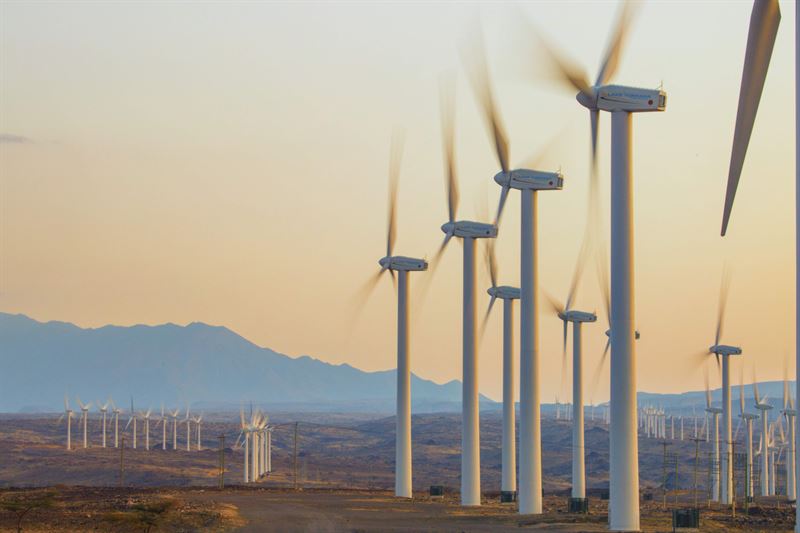
“In the energy portfolio, that means slowing climate change or helping societies adapt to it,” Tourunen says. Projects boost energy efficiency, cut consumption or replace fossil fuels with renewable power. The portfolio includes extensive wind and solar assets.
Distributed generation is gaining ground
Finnfund has helped finance major solar parks, for example, in Egypt and Jordan, typically involving multiple investors.
More recently, the company has shifted toward decentralised renewable energy projects, with new ones under preparation.
The shift is significant: “Distributed generation is an effective way to create impact,” Tourunen says. “These projects involve several small power plants—for example, roughly 1 MW solar units installed on the rooftops of factories, offices or warehouses—all owned by a single operator that we finance.”
Another trend is the rise in private buyers. Where national utilities once dominated as off-takers, private companies are increasingly purchasing renewable electricity, sometimes across several countries. “Energy investments are becoming more diverse,” he says.
Because sun and wind are intermittent and hydropower is seasonal, some balancing or peak power is still required.
“The big picture is a transition to renewables and the elimination of emissions, but people in developing countries also need reliable access to electricity. In some grids, for example, gas engine power plants may be needed to support grid stability and enable the energy transition,” Tourunen says.
Finnfund ensures that any fossil plants it finances operate only as backup—not full-time. Finnfund does not invest in large hydropower plants, but focuses solely on small hydro. Portfolio includes also some bioenergy projects.
Energy financing contracts typically run 5–15 years, occasionally up to 20, especially when long power purchase agreements are involved. The energy and infrastructure portfolio includes around 35 projects, almost half of them in electricity generation, with a combined capacity of about 850 MW—set to grow in the near term. Finnfund invests in five to seven projects annually.
Finnfund’s financing share in large wind or solar projects—usually tens to hundreds of megawatts—is typically €10–20 million, always alongside other investors. The portfolio’s book value is about €170 million, with an additional €100 million in undisbursed commitments.
Electric mobility emerges as a new sector
Electric mobility has become an increasingly important investment theme.
Replacing combustion engines with electricity delivers greater climate benefits as the share of clean energy in grid electricity production rises.
Finnfund finances Vietnam’s Vinfast, which manufactures electric vehicles, including buses. In India, it supports Transvolt Mobility, focused on heavy electric transport such as buses and trucks, as well as Fortum Charge & Drive, an EV charging infrastructure operator.
Finnfund is committing more capital to projects that enhance energy efficiency. Waste-related projects are also part of the portfolio, though commercially viable opportunities remain rare. A new waste and recycling project is currently under review.
One industrial investment is a solar panel manufacturing plant in Thailand.
“We can invest in almost any industry if the project delivers significant climate or environmental benefits, or improves energy or resource efficiency,” Tourunen says. “This helps fight climate change and supports several planetary boundaries.”
In some developing regions, up to half the population faces electricity shortages and unreliable grids. In others, stable power is widely available.
Rapid economic and population growth increase demand, and many countries still rely heavily on fossil electricity while seeking to transition toward renewables.
“In Vietnam, for instance, although energy access is at a good level, about half of electricity is still fossil-based,” Tourunen notes.
Kenya, by contrast, generates most of its electricity from renewable sources.
“Many developing countries are strongly committed to scaling renewable energy. Geography helps too—solar yields are often far higher than in countries like Finland.”
Gender impacts are among Finnfund’s criteria. “We strive to promote gender equality also in our energy sector projects, and we have been successful in this. This is important, as globally only 20% of the sector’s employees are women,” Tourunen says.
Energy projects also bring electricity to small businesses that often serve women-dominated sectors.
About half of Finnfund’s energy and infrastructure investments remain in Africa, though the share in Asia and Latin America—especially India—has grown. “India will become a major destination,” Tourunen predicts.
“Impact alone is not enough. Finnfund’s energy projects must also be profitable, sustainable and yield returns,” Tourunen summarises. Development financiers also play a catalytic role: their participation helps attract private investors.
But he warns that some development financiers or non-commercial financiers may provide overly generous financing.
“That’s not good since a market-based, reliable, affordable and sustainable supply of energy is the long-term solution. Electricity should not become too cheap, all consumption must carry a price,” he says.
More information
Jussi Tourunen, Associate Director, Finnfund, +358 40 568 0578, jussi.tourunen@finnfund.fi
Media contact: Terhi Elomaa, Communications Manager, Finnfund, +358 40 194 0281, terhi.elomaa@finnfund.fi
Finnfund is a Finnish development financier and impact investor. Finnfund builds a sustainable future and generates lasting impact by investing in businesses that solve global development challenges with Finnish added value. Each year, we invest 200–250 million euros in 20–30 companies in developing countries. Our focus is particularly on digital infrastructure and solutions, clean energy, forestry, agriculture, and on providing funding for small and medium-sized enterprises through financial institutions. Today, Finnfund’s investments, commitments, and investment decisions total about 1.3 billion euros. The company has about 100 employees based in Helsinki and Nairobi. For more information, please visit https://www.finnfund.fi/en.