Finnfund's Uusihakala: "Fixed broadband is the key to tackling poverty in developing countries"
Finnfund’s Juho Uusihakala argues that affordable, fixed broadband internet is the solution to poverty in developing nations. “To achieve this goal, we must overcome three digital divides—coverage, usage, and quality. This requires investment in companies delivering affordable fixed internet to places where it’s currently unavailable.”
The UN’s International Telecommunication Union (ITU) states that the internet should be universal, accessible to all. But for connectivity to be truly beneficial, it must be fast, reliable, and affordable. “In Africa, for example, there are only eight million fixed connections—less than one per cent of the population. Most data traffic relies on slower mobile networks”, says Uusihakala, Finnfund's Senior Development Impact Adviser.
The three digital divides
The Coverage Gap refers to people living in areas without mobile broadband. This number has dropped rapidly—from 1.4 billion in 2015 to 300 million in 2024, just a per cent of the world’s population. The coverage gap is now mainly an issue in remote, impoverished parts of Africa, where extending connectivity is difficult and expensive.
The more significant challenge is the usage gap—3.1 billion people live within reach of mobile broadband but do not use it. The usage gap is ten times larger than the coverage gap, often because devices or connections are too expensive. “Over half of those affected live in South Asia and Sub-Saharan Africa, with India having the largest usage gap. Many have phones capable of internet access but don’t use them due to a lack of information, digital skills, or relevant content. Cultural factors also play a role; for example, many women in India remain offline due to perceived irrelevance and language barriers”, describes Uusihakala.
Women in South Asia and Sub-Saharan Africa are 30 per cent less likely than men to use the internet. The mobile industry association GSMA estimates that bridging these divides could boost global GDP by $4.8 trillion between 2023 and 2030, with more than half of the growth coming from South Asia and Africa.
The third divide is quality. The economic benefits of the internet grow as its use becomes more sophisticated—especially when it’s used for work and accessing services.
Affordable fixed internet as a solution
Uusihakala believes the answer is clear: invest in companies that bring affordable fixed internet to underserved areas.
“In Kenya, for example, 75% of those who gained fixed internet through our investee company Poa! Internet increased their income by working or studying online. With a monthly cost of about €10, even those with low incomes can afford the service.”
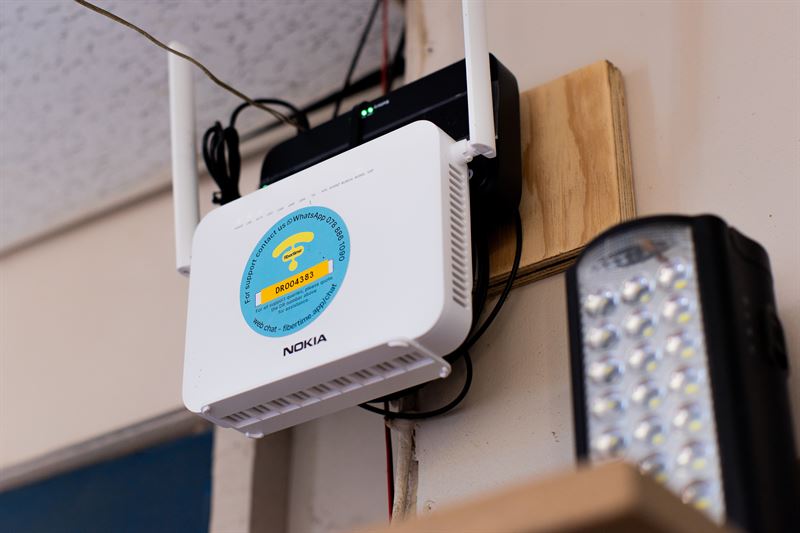
In South Africa, Fibertime delivers fixed internet to poor neighbourhoods using Nokia technology. Research shows that those with unlimited Fibertime access are twice as likely to secure permanent employment—many are single mothers. A stable job enables long-term life planning.
Uusihakala points out that data consumption in Africa is still very low, which limits economic benefits and increases inequality compared to other regions.
Finnfund’s investments in internet providers have a clear link to improved quality of life. The first use of increased income is often better education for children, followed by maintaining family connections—especially important in places like Nepal, where many have relatives abroad. Video calls have revolutionised family communication.
Artificial intelligence is also reshaping digital investments in developing markets. Uusihakala warns that if some regions fall behind in AI, it could harm global development. Ensuring equitable access to AI’s benefits is crucial, as AI requires vast data and infrastructure—posing both challenges and opportunities in places where reliable internet access is not a given.
More information
Juho Uusihakala, Senior Development Impact Adviser, Finnfund: juho.uusihakala@finnfund.fi, tel. +254 79 521 90 21 / +358 50 549 3109
Unna Lehtipuu, Chief Communications Officer, Finnfund, unna.lehtipuu@finnfund.fi, tel. +358 40 624 0896
Finnfund is a Finnish development financier and impact investor. Finnfund builds a sustainable future and generates lasting impact by investing in businesses that solve global development challenges with Finnish added value. Each year, we invest 200–250 million euros in 20–30 companies in developing countries. Our focus is particularly on digital infrastructure and solutions, clean energy, forestry, agriculture, and on providing funding for small and medium-sized enterprises through financial institutions. Today, Finnfund’s investments, commitments, and investment decisions total about 1.3 billion euros. The company has about 100 employees based in Helsinki and Nairobi. For more information, please visit https://www.finnfund.fi/en.