A Scientific Legacy: Prof. Klaus Kümmerer Defines Guiding Principles for the Chemistry of the Future
New publication in Angewandte Chemie International Edition – Pathways for transforming chemistry toward sustainability
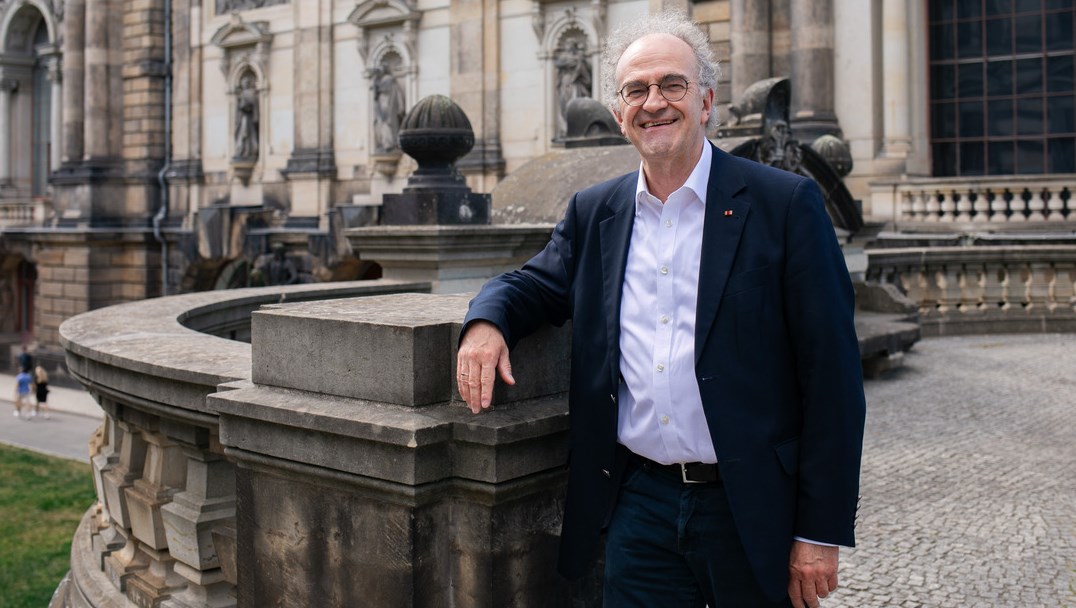
Chemistry is undergoing a fundamental transformation: away from linear material flows and purely efficiency-driven approaches, and toward a systemic understanding of sustainability. In a new scientific publication Embedding Chemistry and Pharmacy Into Sustainability in the renowned journal Angewandte Chemie International Edition, Prof. Dr. Klaus Kümmerer, long-serving Head of the Research & Education Hub of the International Sustainable Chemistry Collaborative Centre (ISC3), outlines key guiding principles for this transformation. Kümmerer, recipient of the Wöhler Award for Sustainable Chemistry and the Order of Merit of the Federal Republic of Germany, is considered one of the world’s leading voices in Sustainable Chemistry. In his article, the honorary doctorate recipient of Ghent University and University of Helsinki analyzes the development of chemistry in the context of global sustainability challenges and demonstrates how the understanding of chemistry must fundamentally expand. One of the publication’s central conclusions: circular economy approaches and renewable resources alone are far from sufficient.
„With this publication, Prof. Kümmerer presents a comprehensive and visionary body of work that clearly highlights the decisive role of Sustainable Chemistry in building a sustainable future,” said ISC3 Managing Director Thomas Wanner.“ His summary of the concept of Sustainable Chemistry, its impact, and its significance is more than a scientific legacy. It is already a standard reference work in Sustainable Chemistry.“
Chemistry must be consistently embedded within sustainability – sustainability must not be treated merely as an afterthought. Otherwise, chemistry will not be able to make an effective contribution to sustainable development and risks losing further public acceptance. This means integrating scientific knowledge, societal needs, and ethical responsibility from the outset. It is crucial to understand that green, circular, recyclable, or renewable does not automatically mean sustainable. Sustainability must be the benchmark and the driving force – not chemistry itself,” says Prof. Kümmerer, drawing on more than 30 years of research and advisory experience in Sustainable Chemistry and pharmacy.
ISC3 strengthens the global transition to Sustainable Chemistry
The approaches presented in the publication reflect key fields of work at the International Sustainable Chemistry Collaborative Centre – from promoting sustainable innovation and capacity building to helping shape international policy processes. The ISC3 Key Characteristics of Sustainable Chemistry, which were significantly shaped and co-developed by Prof. Kümmerer, also form an important link to the new scientific publication.
The center pursues a multi-stakeholder approach and relies on collaboration among policymakers, public and private actors, industry, academia, and civil society worldwide. It strengthens expertise and sustainability competencies, contributes to international chemicals policy, advises organizations, promotes innovation and entrepreneurship, develops education and degree programs as well as training courses, and initiates strategic alliances to advance the transformation toward Sustainable Chemistry.
From Molecules to a Systems Perspective
At the heart of the publication lies a paradigm shift: chemistry can no longer focus in isolation on substances, materials, and processes. Instead, it must consider sustainability impacts across the entire life cycle and in a global context. This includes ecological, economic, and social dimensions, as well as the temporal and spatial effects of chemical products and processes.
Sustainable Chemistry is understood as an integrative approach that goes beyond traditional concepts such as Green Chemistry or Circular Economy. It connects these approaches while expanding them through systems thinking, sufficiency strategies, and societal responsibility.
More Than Circular Economy: Reduction and Needs in Focus
With regard to the circular economy as one component of Sustainable Chemistry, Prof. Kümmerer emphasizes in the publication that not all substances and materials can be managed in fully circular systems, and that the effort required to do so must also be considered. “If we take sustainability seriously, we must fundamentally rethink chemistry – not only to make it more efficient, but more systemic, forward-looking, and responsible. It is not enough to optimize individual processes or products or to close material loops. We must understand which functions we actually need, how overall material flows can be reduced, and what impacts our decisions will have over decades and across the globe,” explains Kümmerer, who advises, among others, the European Union and United Nations Environment Programme (UNEP). “This also means asking fundamental questions: Is a chemical solution needed at all? Are there alternative, non-material approaches that can fulfill the same function?”
Sustainable Innovation Requires Early Rethinking
Sustainability cannot be added to products afterward. Rather, it must be integrated from the very beginning – starting at the molecular level and extending to business models and societal applications, according to one of the world’s leading experts in Sustainable Chemistry. This also places greater emphasis on responsibility toward future generations. Chemical innovations must not only function technically, but also be compatible in the long term, safe, and socially acceptable.
Christian Ruth-Strauß
Director Communications ISC3
christian.ruth-strauss@isc3.org
René Sutthoff
Konsequent PR
sutthoff@konsequent-pr.de
About the International Sustainable Chemistry Collaborative Centre (ISC3)
The International Sustainable Chemistry Collaborative Centre (ISC3) advances the global transition to Sustainable Chemistry across chemical value chains with cross-sectoral impact. The chemical industry is deeply interconnected with almost all areas of the economy and shapes the lives of people worldwide.
ISC3 promotes a holistic sustainability approach that embeds sustainable technologies, processes and products throughout supply chains. Products are considered across their entire life cycle – from design and production to use and further processing. This approach integrates environmental, economic and social dimensions, supports the closing of material loops within a circular economy, and fosters new efficiency- and sustainability-oriented business models. At the same time, ISC3 promotes a shift in thinking among stakeholders by advancing sufficiency strategies, helping to reduce the absolute consumption of materials, resources and energy, and encouraging solutions that are aligned with actual needs.
The Centre follows a multi-stakeholder approach, bringing together policymakers, public and private actors, industry, academia and civil society worldwide. It strengthens expertise and sustainability competencies, contributes to international chemicals policy, advises organisations, promotes innovation and entrepreneurship, and develops education and training programmes. In addition, ISC3 initiates strategic alliances to accelerate the transition to Sustainable Chemistry.
ISC3 was established in 2017 on the initiative of the German Federal Ministry for the Environment, Climate Action, Nature Conservation and Nuclear Safety (BMUKN) and the German Environment Agency (UBA). The Centre is hosted by the Deutsche Gesellschaft für Internationale Zusammenarbeit (GIZ) GmbH and supported by DECHEMA (Society for Chemical Engineering and Biotechnology) as the ISC3 Innovation Hub. www.isc3.org