ISC3 and SNI Strengthen Cooperation to Advance Sustainable Chemistry in Peru
Letter of Intention provides framework for joint activities until 2028 – SNI celebrates 130 years of industrial leadership
The International Sustainable Chemistry Collaborative Centre (ISC3) congratulates the Sociedad Nacional de Industrias (SNI) on its 130th anniversary and celebrates a growing partnership dedicated to advancing Sustainable Chemistry and sustainable industrial transformation in Peru.
Founded in 1896, SNI has played a central role in Peru’s industrial development for more than a century. Today, it continues to serve as an important platform for dialogue, innovation and collaboration between industry, government and academia.
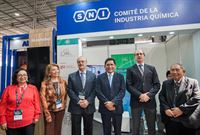
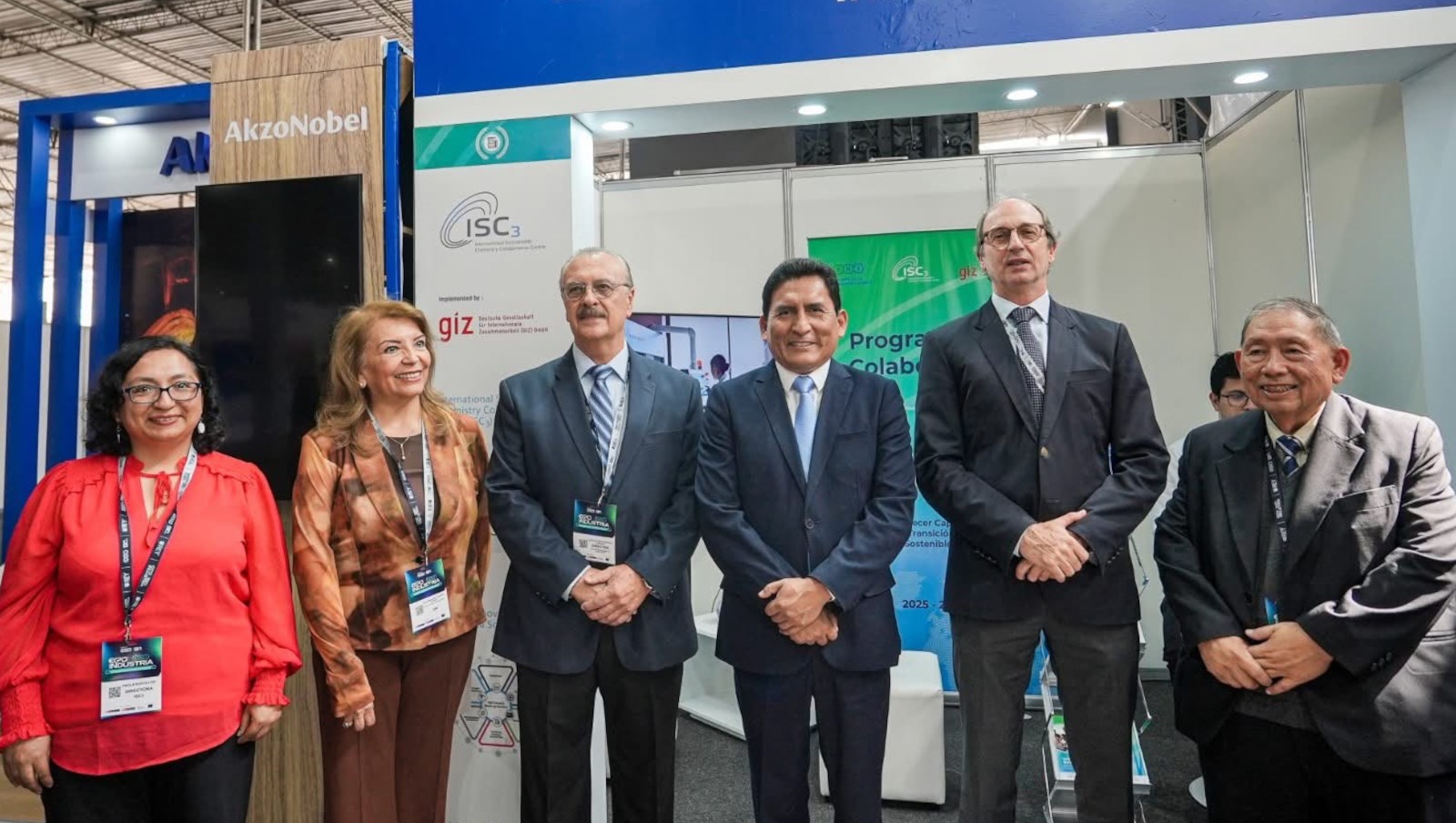
Building on this shared commitment to sustainable development, ISC3 and SNI signed a Letter of Intent (LoI) in 2026, establishing a framework for cooperation until the end of 2028. Through this partnership, both organisations aim to strengthen knowledge exchange, foster innovation and support the transition towards more sustainable industrial processes and value chains.
“Strong partnerships are essential to accelerate sustainable industrial transformation. We highly value our cooperation with SNI and its Chemical Industry Committee and look forward to further expanding our joint activities in Peru,” said Dr. Thomas Wanner, Managing Director of ISC3.
Since the signing of the Letter of Intention, ISC3 and SNI have successfully implemented several joint initiatives. These include a Training of Trainers workshop on Power-to-Chemicals, a National Dialogue Forum on Sustainable Chemistry and joint participation in the Expo Industria event. The activities have brought together representatives from industry, government institutions, academia and vocational education, creating valuable opportunities for dialogue, knowledge exchange, and capacity building.
The cooperation has contributed to raising awareness of Sustainable Chemistry as an important enabler of innovation, competitiveness and sustainability within the Peruvian industrial sector. By connecting stakeholders from different sectors, ISC3 and SNI are helping to create a collaborative ecosystem that supports the development and implementation of sustainable solutions.
Looking ahead, both organisations intend to continue their cooperation on topics of strategic relevance, including sustainable approaches to electrical and electronic waste management, circular economy solutions and sustainability in the pharmaceutical sector.
“As SNI celebrates its 130th anniversary, we reaffirm our commitment to fostering innovation and sustainable industrial development in Peru. Our cooperation with ISC3 provides a valuable platform to connect industry, government and academia, and to advance Sustainable Chemistry as a key driver for competitiveness and environmental responsibility. We look forward to further strengthening this collaboration in the years ahead,” said Engineer Bruno Alecchi, President of the Chemical Industry Committee of the National Society of Industries (SNI).
Through their joint activities, ISC3 and SNI reaffirm their commitment to promoting Sustainable Chemistry, fostering innovation and supporting sustainable industrial development in Peru and beyond.
Christian Ruth-Strauß
Director Communications ISC3
christian.ruth-strauss@isc3.org
René Sutthoff
Konsequent PR
sutthoff@konsequent-pr.de
About SNI
The National Society of Industries (SNI), founded in 1896, is Peru's main business association, representing various sectors of the national industry and promoting sustainable, innovative, and competitive industrial development. Within its organization, it has the Chemical Industry Committee, which promotes the competitiveness of the sector and related areas, helping the community see the Chemical Industry as an activity that enhances people's well-being, together with environmental care and the inclusive progress of the country.
The National Society of Industries was born as the voice of the national manufacturing industry and with the purpose of boosting Peruvian production, representing the industrial private sector, and helping strengthen the social market economy.
As the main guild of Peruvian manufacturing, it brings together more than 50 committees from various productive sectors, such as food and beverages; textiles and clothing; chemical industry; paper; plastics; metalworking; defense; distilled spirits; telecommunications, among others.
Throughout its history, it has accompanied the main processes of economic and productive transformation in Peru, driving initiatives related to national and international competitiveness, productivity, innovation, investment, and the generation of formal employment.
Through its ten regional offices, the SNI promotes decentralized industrial development. In recent years, it has expanded its scope of action to respond to new sector challenges, promoting productive sustainability, the circular economy, and the formalization of micro, small, and medium-sized enterprises, as well as new technologies and digital transformation.
With 130 years of history, the SNI continues to strengthen a modern, sustainable industry that generates added value and is competitive, serving as a driver of employment, innovation, and economic and social development.
About the International Sustainable Chemistry Collaborative Centre (ISC3)
The International Sustainable Chemistry Collaborative Centre (ISC3) advances the global transition to Sustainable Chemistry across chemical value chains with cross-sectoral impact. The chemical industry is deeply interconnected with almost all areas of the economy and shapes the lives of people worldwide.
ISC3 promotes a holistic sustainability approach that embeds sustainable technologies, processes and products throughout supply chains. Products are considered across their entire life cycle – from design and production to use and further processing. This approach integrates environmental, economic and social dimensions, supports the closing of material loops within a circular economy, and fosters new efficiency- and sustainability-oriented business models. At the same time, ISC3 promotes a shift in thinking among stakeholders by advancing sufficiency strategies, helping to reduce the absolute consumption of materials, resources and energy, and encouraging solutions that are aligned with actual needs.
The Centre follows a multi-stakeholder approach, bringing together policymakers, public and private actors, industry, academia and civil society worldwide. It strengthens expertise and sustainability competencies, contributes to international chemicals policy, advises organisations, promotes innovation and entrepreneurship, and develops education and training programmes. In addition, ISC3 initiates strategic alliances to accelerate the transition to Sustainable Chemistry.
ISC3 was established in 2017 on the initiative of the German Federal Ministry for the Environment, Climate Action, Nature Conservation and Nuclear Safety (BMUKN) and the German Environment Agency (UBA). The Centre is hosted by the Deutsche Gesellschaft für Internationale Zusammenarbeit (GIZ) GmbH and supported by DECHEMA (Society for Chemical Engineering and Biotechnology) as the ISC3 Innovation Hub. www.isc3.org