Sustainable Chemistry Changemakers: The Road Ahead
Nina Energy: From ISC3 Start-up of the Month to Global Climate Protection Innovation
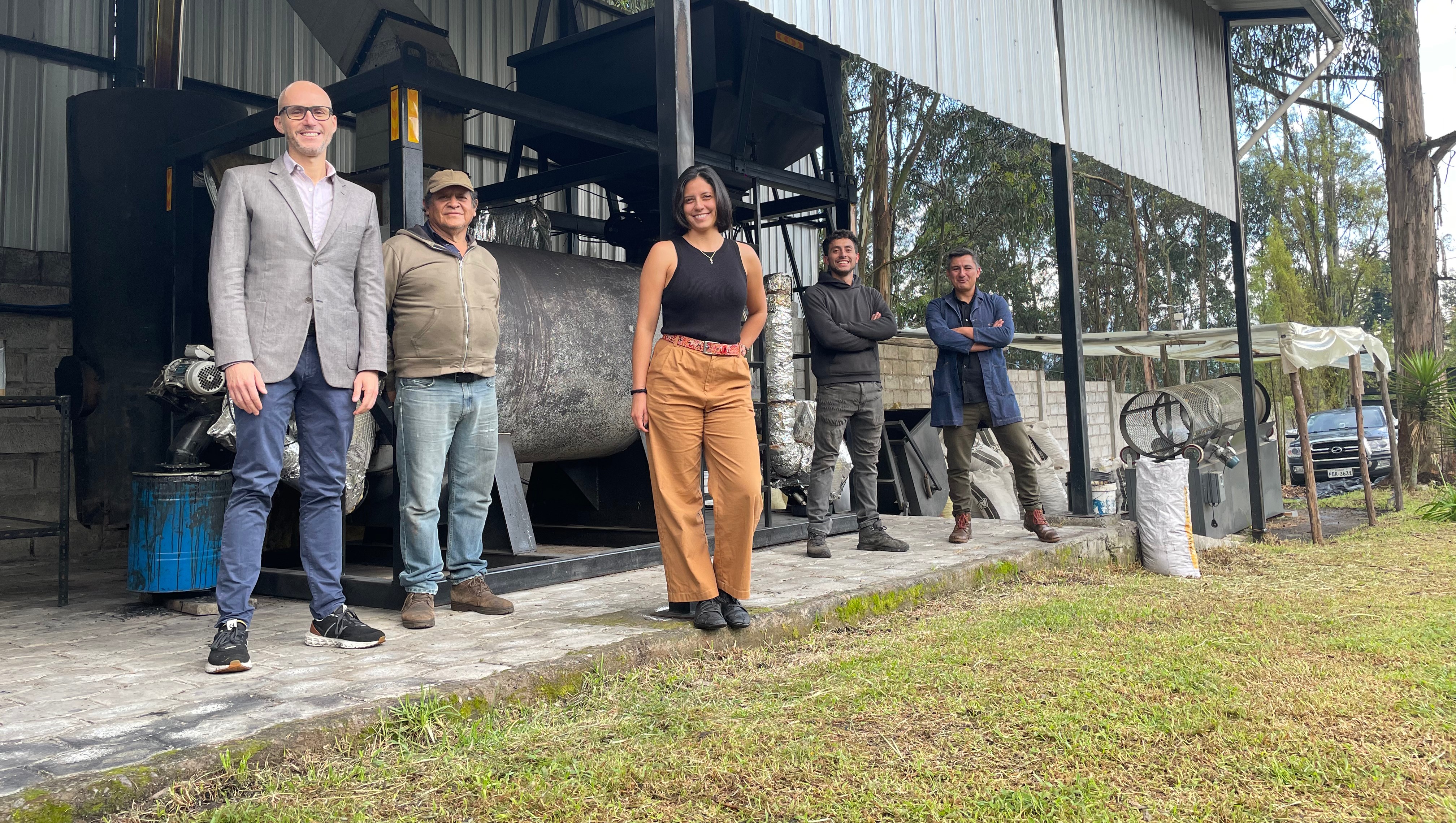
In September 2019, Nina Energy (former Andes Bioenergy) was announced Start-up of the Month by the International Sustainable Chemistry Collaborative Centre (ISC3) for its pioneering climate protection company idea. Founder Mario Salgado also received the “Elsevier-ISC3 Award for Entrepreneurship in Sustainable Chemistry“. His company from Ecuador had developed an innovative pyrolysis technology that transforms agricultural biomass waste into biochar and renewable thermal energy. Biochar not only enhances soil quality but also captures and stores carbon, helping to mitigate climate change. This carbon sequestration capability enables the generation of tradable carbon credits, adding an economic incentive to its environmental benefits. With the support of ISC3, the start-up has undergone a significant transformation and has not only expanded but also significantly developed its processes and team. Production capacities have increased fivefold and the overall positive impact on the climate has multiplied. Most recently, Nina Energy secured investment from the prominent climate tech funds Next Step and Carbon13. Furthermore, Nina Energy was selected as one of only eight start-ups for the Remove Global Accelerator Program. This opportunity is expected to further accelerate the company’s development and global reach.
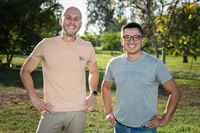
More than five years after being named ISC3 Start-up of the Month, we spoke to founder Mario Salgado and Nina Energy co-founder Andres Novillo about the importance of Sustainable Chemistry, the challenges and highlights of the start-up's journey and the role of ISC3 Global Start-up Service in supporting its growth.
What does Sustainable Chemistry mean to you?
Sustainable Chemistry is a holistic approach that aims to improve the efficiency with which natural resources are used to meet human needs for chemical products and services, while minimizing negative impacts on the environment, society, and the economy. It addresses urgent global challenges such as climate change and resource scarcity. At Nina Energy, we see Sustainable Chemistry as a framework that guide us to align the processes concerning our pyrolysis technology with broader sustainability goals. Accordingly, we consider the most recent developments in sustainability, especially those focusing on growth within the constraints of biophysical boundaries. A clear action in this regard is the calculation and analysis of the entire life cycle of our products – from raw materials to the safe use of our biochar and bio-oil products.
Finally, we take systems thinking – specifically socio-technical systems theory – into account when developing our technology, particularly in relation to agricultural systems, waste management, and efforts to combat the climate crisis. We also consider the principles of Green Chemistry when it comes to minimizing waste, improving energy efficiency and reducing environmental impact compared to conventional methods for biomass disposal and recycling.
Where do you stand today compared to when you were named Start-up of the Month?
Our core technology for the advanced conversion of residual biomass has matured considerably. We have moved from the first laboratory-scale tests towards the operation of pilot plants. Currently, we are on the way to implement industrial scale production. We increased the production capacity of our reactors and facilities fivefold, and we have carried out several iterations to optimize pyrolysis gas conversion and other critical aspects of the pyrolysis process. Overall, we have significantly increased the efficiency and scalability of our biochar and bio-oil production processes, gained confidence in the environmental sustainability of our technology and established a solid customer base for our pyrolysis facilities in Ecuador and in Southern Europe, particularly in Italy.
How have you benefited from the collaboration with ISC3 and the support of the ISC3 Global Start-up Service?
The ISC3 Global Start-up Service has been crucial to our growth and development as an emergening start-up in the field of thermochemical conversion. Our successes are a direct result of the support from ISC3 and the continuous assistance we have received from the ISC3 network. Perhaps the most important benefit is the increased credibility given to our company through the backing of ISC3. Being recognised and supported by such a respected organisation in the field of Sustainable Chemistry has opened doors for us with investors and accelerator programmes. We have also benefited professionally from the ISC3 Global Start-up Service. The Mentors and Experts Programme helped us refine our technology and business strategy and ensure we are on the right path to sustainable growth. Through the ISC3 events and connections, we have been able to expand our network of stakeholders in Sustainable Chemistry. The opportunity to participate in the ISC3 Investor Forum in the frame of the Impact Festival was a milestone. There, we presented our work to the German NGO Atmosfair, which led to personal meetings in Berlin followed by field visits of Atmosfair officials to our facilities and sources of residual biomass in Ecuador. All this events resulted in valuable partnerships and collaborations for future opportunities.
What were the highlights among the projects that were realized?
The successful scaling of our technology from pilot to industrial scale, and the proof that our reactor are capable of continuous operation are certainly the first to be mentioned. Furthermore, we were able to establish major partnerships with agricultural cooperatives and industrial customers for biochar and bio-oil (pirolitic liquids in general). The further development of our portfolio through new patent applications in connection with our optimised pyrolysis technology and our processes for pyrolysis gas treatment and utilization are further milestones. Moreover, we established a partnership with an important company in metal manufacturing industry in Spain to leverage decentralized manufacturing of our technology. This enabled us to further establish operations on the European market. Last but not least, we concluded a contract with a major German NGO to implement an industrial scale facility for biochar production in one of Ecuador’s leading forest production regions, recognized for its FSC-certified sustainable forestry practices. This agreement secures the coverage of 70 percent of the investment and operating costs of the facility through a non-repayable subsidy and ensures the purchase of 100 percent of the carbon credits generated along the way.
What does all this mean for your company?
On one hand, a range of successes and achievements significantly boosted our visibility and recognition within the carbon dioxide removal (CDR) industry. Moreover, we have earned the trust of key stakeholders in the CDR industry while advancing our processes to full industrial-scale maturity. Most importantly, a successful pre-seed financing round – led by our main investor, Next Step – has empowered us to further refine our business model and strengthen our technical capabilities.
Christian Ruth-Strauß
Director Communications ISC3
christian.ruth-strauss@isc3.org
René Sutthoff
Konsequent PR
sutthoff@konsequent-pr.de
About ISC3
The International Sustainable Chemistry Collaborative Centre promotes Sustainable Chemistry for a sustainable world. ISC3 supports the chemical industry and chemical-related sectors in their transformation process through sustainable, innovative approaches from Sustainable Chemistry. The goal is a circular economy that integerates multiple aspects of sustainability throughout the entire product life cycle and encourages a shift in stakeholder behaviour. To advance the dialogue between different sectors and actors worldwide, including Europe and other regions as well as emerging and developing countries, ISC3 follows a multi-stakeholder approach with the networking of policymakers, public and private sectors, education, science and society. It contributes to international chemicals policy, develops professional and academic training programs, advises companies, and promotes start-ups and research. Founded in 2017 by the Federal Ministry for the Environment, Climate Protection, Nature Conservation und Nuclear Safety (BMUKN) and the Federal Environment Agency (UBA), the centre is implemented by the German Deutsche Gesellschaft für Internationale Zusammenarbeit (GIZ; Englisch: Society for International Cooperation) and supported by the Society for Chemical Engineering and Biotechnology (DECHEMA e.V.) as ISC3 Innovation Hub. www.isc3.org