
SSC awarded additional ground station contracts for EU’s Earth Observation program Copernicus
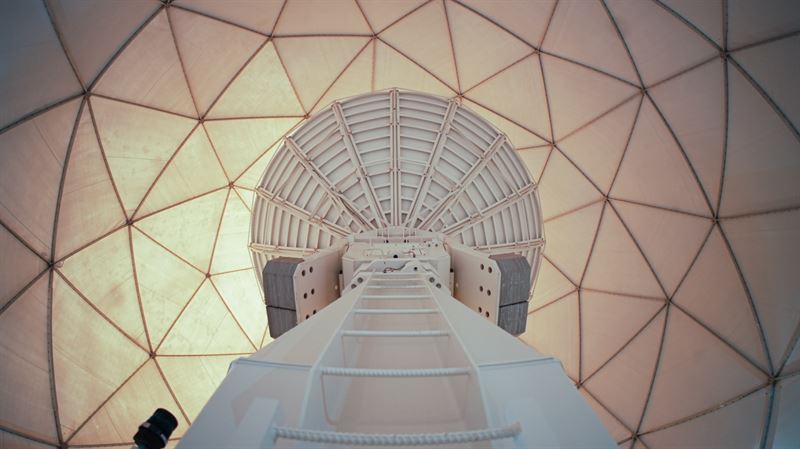
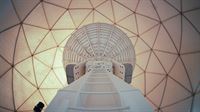
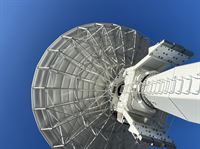
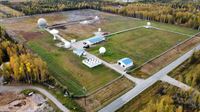
Swedish Space Corporation (SSC) has been awarded several additional satellite ground station contracts by ESA for Copernicus, EU’s Earth Observation program. The new contracts include ground station support from both Punta Arenas, the US and Canada.
SSC has supported the Copernicus program since 2020. The new contracts include adding satellite ground support by adding the Punta Arenas Satellite Station to the Copernicus ground network, as well as additional Copernicus satellites to be supported by SSC ground stations in the U.S., Canada and Sweden.
The Copernicus program has been instrumental for global climate earth observation and crisis management, such as the recent wildfires in Los Angeles where atmospheric data and global fire monitoring helped local firefighting. The program offers open and free-of-charge access to Earth Observation data from satellites and in-situ measurement systems, aiding various international organizations in developing modern society and improve everyday life. Key areas include climate change, environment, energy supply, agriculture, forestry, healthcare, safety, security, urban planning, and more.
“Policy makers, researchers, commercial to private users, as well as the global scientific community can benefit in many ways from the data and information provided by Copernicus. Hence, we are proud of our partnership and pleased that ESA have chosen to expand our collaboration. And we prepare for it to grow even further,” says Nicholas Priborsky, President of Division Connect at SSC.
The expanded satellite ground station contracts include:
- Support for the commissioning phase of the new Sentinel-1C satellite from Inuvik Satellite Station, as well as additional passes to be covered via Esrange Space Center.
- Support for Sentinel-1A and Sentinel-1C from Inuvik Ground Station until November 2026.
- Support for the commissioning phase of the new Sentinel-2C satellite to be covered via Inuvik Ground Station and Punta Arenas Satellite Station.
- Support for the Sentinel-2B and Sentinel-2C satellite routine operations from Punta Arenas Satellite Station.
This is an extension of the previous contract from 2020, including:
- S-band TT&C support for the Sentinel-1, Sentinel-2, Sentinel-3 and Sentinel-5P missions
from Esrange Space Center, Inuvik Ground Station, and North Pole Satellite Station Alaska. - X-band data acquisition support for Sentinel-2 mission from Inuvik Ground Station.
For more information, please contact: Philip Ohlsson, Press & PR, +46 70 721 70 26, philip.ohlsson@sscspace.com
Multimedia: Sentinel-2 | EO photo | Sentinel family | Sentinel-1 | SSC ground stations
About SSC: SSC (Swedish Space Corporation) is a leading global provider of advanced space services, with more than 50 years of experience. We help space organizations, research institutes, commercial and institutional actors from all over the world to get access to space. With local presence on all continents and about 700 committed employees, we offer specialist expertise in satellite communications and satellite control services, spacecraft operations, rocket and balloon systems, launch services and flight test services, as well as engineering, operations and consultancy services for space missions. We enable successful space projects within Earth observation, telecommunications, security, meteorology, navigation and positioning, scientific research and other applications. Among our strongest assets are Esrange Space Center in northern Sweden, set out to be a leading provider of satellite launch services from mainland Europe, as well as one of the world’s largest commercial ground station networks for satellite communications. Read more at www.sscspace.com.
About Copernicus: Forming the heart of the Copernicus program, three complete two-satellite constellations, Sentinel 1, Sentinel-2 and Sentinel-3, plus two additional single satellites, Sentinel-5P and Sentinel-6A, are currently in orbit. Over these years, SSC has helped ESA to downlink various data by carrying important information about the state of land and vegetation on our planet. Looking to the future, six Sentinel expansion missions are being developed to address EU policy and gaps in Copernicus user needs.