
SubOrbital Express-5 to launch 12 experiments to space
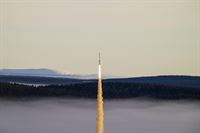
On 28 May, the launch window opens for one of the most anticipated sounding rocket launches of SSC Space. After years of planning and preparation, SubOrbital Express-5 will take off from Esrange Space Center in northern Sweden, providing access to space for twelve advanced scientific projects from organizations in nine countries, and enabling researchers to study physical, biological, and medical processes under conditions not possible on Earth.
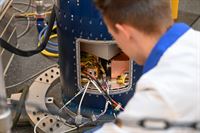
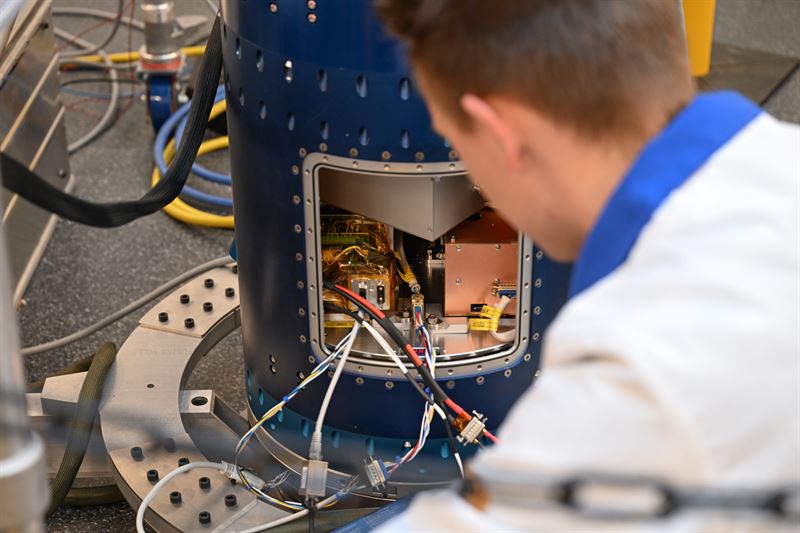
The onboard payload consists of four scientific experiment modules. The three main modules contain research on metal science, fluids for medicine, and human bloodstream behavior for biology insights. A fourth “rideshare module” gives another nine projects a ticket to space. This shared space will provide research opportunities related to human immune cells, stem cells, the solidification process of metal alloys, and more.
“We are all very excited about this upcoming launch. On countless occasions, we have seen that a few minutes of microgravity in space can make a huge difference in taking a research project to the next level. The SubOrbital Express program really is one of the leading services in the world to provide scientists with invaluable access to space for their science projects,” says Stefan Krämer, Program Manager SubOrbital Express, SSC Space.
SubOrbital Express-5 is the seventeenth in a series of MASER rockets launched from Esrange since this flagship sounding rocket program started in 1987. MASER stands for “Materials Science Experiment Rocket” and the European Space Agency, ESA, is the program’s largest customer, funding several of the experiments onboard.
General information
- Location: Esrange Space Center, Northern Sweden, Lat 67.88, Long 21.07
- Launch Site: The Skylark Tower
- Campaign period: 19 May - 7 June
- Launch period: 28 May - 7 June
- Rocket type: RedKite two-stage RK-RK launcher by Bayern Chemie
- Number of payloads: Twelve (12)
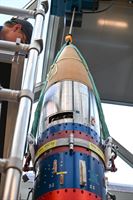
- Rocket length: 13 meters (43 ft)
- Total mass: 1,346 kg
- Payload mass: 431 kg
- Apogee: 260 km
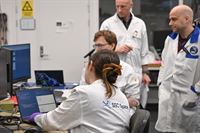
- Campaign partners: SSC Space, DLR MORABA, ESA, and participating science teams.
- Program Manager: Stefan Krämer, SSC Space
- Campaign Manager: Maximilian Speier, SSC Space
Experiments in the three main modules
- XRMON Mg-μg: This material science experiment will use a micro-focus X-ray source for in-situ and time-resolved radiography (radioscopy) of metal-alloy samples under microgravity. By imaging crystal formation and melt/composition changes as they occur, the experiment aims to quantify how reduced gravity alters solidification pathways and resulting microstructure. The results will help guide the design of lightweight magnesium alloys for transport and biocompatible, bioresorbable Mg–Zn materials, and serve as a step toward similar studies on crewed platforms such as the ISS. The project is run by University College Dublin, Ireland.
- KRABS: This experiment in biofluid physics investigates the transient flow behavior of human red blood cells in microgravity, with applications to blood circulation under spaceflight conditions. It aims to quantify the evolution of red blood cell aggregation, microstructure formation, and rheological response during controlled flow transients. During the flight, blood suspensions will flow through microfluidic channels while being characterized using pressure and flow sensors together with high-resolution optical diagnostics, including bright-field microscopy, digital holography, and light scattering. Time-synchronized imaging and sensor data will be transmitted for live monitoring and recorded onboard for detailed post-flight analysis to improve the understanding of blood cell aggregation dynamics and rheological changes. The project is run by the French National Centre for Scientific Research (CNRS) - Université Grenoble Alpes (UGA), and Université libre de Bruxelles (ULB).
- IMEDYS: This experiment will investigate how human umbilical vein endothelial cells – key cells lining blood vessels – adapt to altered gravity. During microgravity, the cells will be cultured at 37°C in microfluidic “culture chips” under biomimetic perfusion (shear stress), then exposed to a short hyper-gravity phase followed by microgravity. Samples will be chemically fixed at defined timepoints (pre-launch, post-hyper-g, and end of μg) for post-flight analysis. The experiment aims to quantify gravity-driven changes in cell morphology and mechanobiology, focusing on actin cytoskeleton organization, cell-substrate and cell-cell adhesion (focal adhesions/adherens junctions), and the glycocalyx involved in mecha-notransduction. The project is run by the University of Grenoble, France.
The experiments in the Shared Module:
- SATypus ONE: This experiment will use two Kromek gamma-ray spectrometers to explore means to improve the radiation absorption/shielding ability of modified basalt fiber composite samples which could be used as a means to create lunar housing using mostly in situ lunar materials for more premiant human residence. The project is run by QUT Aerospace Society, Brisbane, Australia.
- CARISPACE: This experiment will investigate how microgravity modulates genome architecture and regulatory activity in human immune cells, aiming to determine whether such responses reflect reversible adaptation to sustained weightlessness or instead promote persistent, potentially detrimental alterations relevant to astronaut health during long-duration missions. The project is run by The Ministry of Education of St. Kitts and Nevis, in collaboration with Space Hub Universität Zürich (UZH Space Hub), Switzerland.
- AURORE-III: This experiment consists of an enclosed box with a camera, a screen, a microphone, accelerometers, pressure sensors and temperature sensors. The goal is to film the three sample bays also in the box, while sending sensor data with variable bandwidth based on what is available to us to a ground station, showing the effects of 0g. The project is run by members of the Swedish Astronomical Youth Association (Astronomisk Ungdom).
- SMAUG: This experiment will solidify deeply undercooled Al-Ge alloy samples in microgravity using a flux-based, crucible furnace. By removing buoyancy-driven convection and suppressing oxide- and wall-induced nucleation, the experiment aims to achieve rapid, 3D dendritic growth at high undercooling. Recovered samples from four alloy compositions will be analyzed to determine how alloy composition controls the dendrite orientation transition (DOT) and resulting microstructure under fast-solidification conditions. The project is run by the Institute for Frontier Materials on Earth and in Space, German Aerospace Center (DLR), Cologne, Germany.
- GEN-1P: This experiment will fly the GEN-1 capsule (5.9 cm diameter) to support microgravity research and validate key reentry subsystems. The flight carries two active payloads: the GEN-1P rideshare module, using 25 near-infrared sensors to track microorganisms’ metabolic activity and stress responses in real time, and the GEN-2P insect habitat hosting fruit flies (Drosophila) to study biological effects of microgravity. A GEN-3P passive sample holder adds capacity for materials samples. After hypersonic reentry, the capsule is planned for recovery to enable post-flight analysis. The project is run by Genesis Space Flight Laboratories, Čakovec, Croatia.
- YES: This experiment will expose yeast to μ-g conditions before utilization in the fermentation process of water-based beverage production. The project is run by Hochschule Luzern, Switzerland.
- SPARK-01: This mission marks SPARK Microgravity’s first oncology-focused biological payload in a real microgravity environment. The experiment will validate a sealed, end-to-end workflow for preparing, integrating, operating, and recovering cancer biology samples under flight conditions. For SPARK Microgravity, the mission is a critical milestone toward a broader program of oncology research in microgravity and an important validation step for its autonomous biological experimentation platform. The project is run by Munich-based space-biotech company SPARK Microgravity.
- OneSpace-II: This payload will send a number of promotional items into microgravity. The project is run by 1[ONE]Space Concierge 宇宙.
- SpaceGinger-01: This experiment will investigate how microgravity affects samples of red hair taken from a famous Swedish influencer. The project is run by Mauri "Mustiga Mauri" Hermundsson.
Contact: Philip Ohlsson, Head of Press & PR, +46 70 721 70 26, philip.ohlsson@sscspace.com