
Twelve experiments launched to space from Esrange Space Center in Sweden
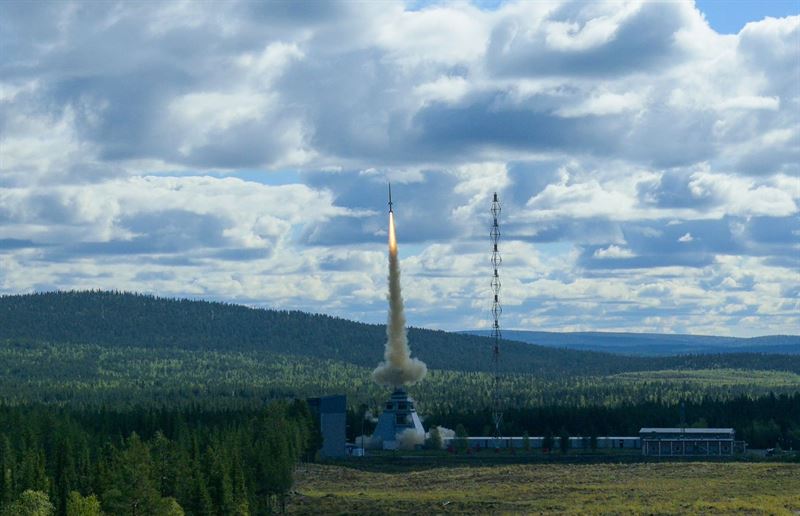
International researchers unlock six minutes of microgravity aboard the SubOrbital Express‑5 rocket.
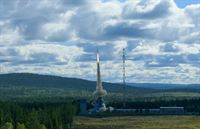
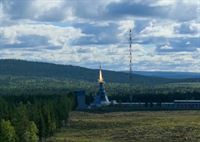
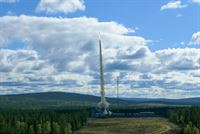
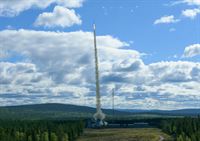
Today at 6:33 a.m. UTC, SSC Space launched its sounding rocket SubOrbital Express-5 from Esrange Space Center in northern Sweden to an altitude of 260 kilometers. The flight provided access to space and more than six minutes in microgravity for twelve scientific projects from nine countries – including research on physical, biological, and medical processes under conditions not possible on Earth.
The mission enabled research that could improve cancer models, astronaut health, and lightweight materials for transport – results that may translate into new medical and industrial breakthroughs.
“We have planned, designed, and built these experiment modules over three years together with our customers, and spent the last weeks preparing the rocket for launch here at Esrange. Now, we look forward to seeing the results from these minutes in space – how they contributed to new insights for these research projects and how they might impact life on Earth,” says Stefan Krämer, Program Manager SubOrbital Express, SSC Space.
SubOrbital Express-5 is the seventeenth rocket of this specific program to be launched from Esrange Space Center since 1987, with the European Space Agency, ESA, being its largest customer, funding several of the experiments onboard.
The twelve payloads onboard covered a wide range of scientific disciplines, including:
XRMON Mg-μg: Material science experiment using a micro-focus X-ray source for radiography to image crystal formation and melt/composition changes under microgravity. The results will help guide the design of lightweight magnesium alloys for transport and biocompatible, bioresorbable Mg–Zn materials and serve as a step toward similar studies on crewed platforms such as the International Space Station, ISS. The project is run by the University College Dublin, Ireland.
CARISPACE: Experiment to investigate how genome architecture and regulatory activity in human immune cells are modulated by microgravity conditions. The results will help determine whether such responses reflect reversible adaptation to sustained weightlessness or instead promote persistent, potentially detrimental alterations relevant to astronaut health during long-duration missions. The project is run by the Ministry of Education of St. Kitts and Nevis, and Space Hub Universität Zürich (UZH Space Hub), Switzerland.
SATypus ONE: Experiment using two gamma-ray spectrometers to explore means to improve the radiation absorption/shielding ability of modified basalt fiber composite samples. The results could help create lunar housing using mostly in situ lunar materials for more premiant human residence. The project is run by the QUT Aerospace Society, Brisbane, Australia.
SPARK-01: Oncology-focused biological payload tested in microgravity. The experiment will validate a sealed, end-to-end workflow for preparing, integrating, operating, and recovering cancer biology samples under flight conditions. The mission is a critical milestone toward a broader program of oncology research in microgravity and an important validation step for its autonomous biological experimentation platform. The project is run by Munich-based space-biotech company SPARK Microgravity.
More information about the mission and onboard science: https://sscspace.com/news/suborbital-express-5-to-launch-12-experiments-to-space/
Contact: Philip Ohlsson, Press & PR, +46 70 721 70 26, philip.ohlsson@sscspace.com
Multimedia: https://sscspace.canto.global/b/KUOEM
About SSC Space: SSC Space (formerly Swedish Space Corporation) is a leading global provider of advanced space services, with more than 50 years of experience. We help space organizations, research institutes, commercial and institutional actors from all over the world to get access to space. With local presence on all continents and about 750 committed employees, we offer specialist expertise in satellite communications and satellite control services, spacecraft operations, rocket and balloon systems, launch services and flight test services, as well as engineering, operations and consultancy services for space missions. We enable successful space projects within Earth observation, telecommunications, security, meteorology, navigation and positioning, scientific research and other applications. Among our strongest assets are Esrange Space Center in northern Sweden, set out to be a leading provider of satellite launch services from mainland Europe, as well as one of the world’s largest commercial ground station networks for satellite communications. For more information, visit www.sscspace.com.