The World's Largest Environmental Award, the Food Planet Prize, Announces 2026 Longlist
As the world faces mounting pressure to align food production with planetary boundaries, the Curt Bergfors Food Planet Prize today announces the 35 initiatives longlisted for its 2026 award—the world’s largest environmental prize. Chosen from more than a thousand nominations and spanning 19 countries and six continents, these initiatives represent some of the most promising efforts to reshape how we produce, distribute, and consume food.
However diverse in culture, the longlisted nominees share an innovative mindset and a strong will to make change—whether through mainstreaming agroecology, using AI to support fishers and farmers, or enhancing school meals with local, organic produce. What all initiatives have in common is the potential to accelerate the transition towards a sustainable food system.
Professor Lindiwe Majele Sibanda, Co-Chair of the Food Planet Prize, emphasizes the importance of these initiatives in driving transformation and collaboration across the global food system: “The Food Planet Prize can be more than an award. It can be a catalyst.”
Regardless of the final outcome, all longlisted nominees make remarkable contributions to food systems transformation and deserve recognition, support, and the opportunity to inspire others to drive positive change.
The prize team will now further examine and evaluate each longlisted initiative to produce a shortlist of 5-10 finalists with the greatest potential impact. From these, the jury will select one winner in June 2026 in Sweden.
About the Food Planet Prize
The Curt Bergfors Food Planet Prize was established in Sweden in 2019, in acknowledgement of the perils that our current food systems pose to the health of people and the planet. The Prize supports initiatives that significantly reduce the environmental impact of the way we eat. Unlike many awards, the Food Planet Prize recognizes initiatives for their potential future impact on the environment rather than past achievements. The Food Planet Prize’s international jury consists of 9 leading specialists in complex Food Planet challenges. The jury is co-chaired by Lindiwe Majele Sibanda and Magnus Nilsson.
For more information:
The 2026 Food Planet Prize Longlist
AI-GENIX (India)
AI-GENIX develops environmentally friendly crop protection devices, reducing reliance on harmful chemicals.
APCNF (Andhra Pradesh Community-managed Natural Farming) (India)
APCNF is one of the world's largest collective transitions to agroecology.
BioPrime AgriSolutions (India)
BioPrime AgriSolutions develops biological crop protection products that boost plant nutrient uptake, disease resistance, and stress tolerance.
Charcops Wetlands (Ghana)
Charcops Wetlands use biochar to construct wetlands that treat greywater and recycle nutrients back into the soil.
Cocina Colaboratorio (Mexico)
Cocina Colaboratorio is a collection of Community Food Labs, weaving together culinary arts, scientific expertise, and local knowledge.
Conscious Kitchen (USA)
Conscious Kitchen transforms school food systems by providing fresh, 100% organic meals sourced directly from regenerative farms.
Croppie (UK, USA, Peru & Kenya)
Croppie is a platform for farmer-owned data that provides personalized farming advice and connection to a global smallholder network.
EatCloud (Colombia & Mexico)
EatCloud uses an AI-powered digital platform to automate the redistribution of unsold food to those in need.
Enviu Agrifood (Netherlands & Kenya)
Enviu Agrifood builds scalable social ventures that transform food systems in sub-Saharan Africa.
FarmerLifeline (Kenya)
FarmerLifeline's solar-powered AI robots provide 24/7 farm surveillance, detecting pests and diseases in seconds to deliver climate-smart solutions directly to farmers' phones.
The Farmlink Project (USA)
The Farmlink Project directly connects farms with surplus produce with hunger-fighting organizations, funding and coordinating the transport of food to those in need.
Food Tank (USA)
Food Tank is a hub for food movement actors and initiatives to share strategies, spread stories, and scale solutions.
Fulani Kitchen Foundation (Ghana)
Fulani Kitchen Foundation is dedicated to supporting female growers of Fonio, one of Africa’s most ancient and climate-resilient grains.
GRAVIS (Gramin Vikas Vigyan Samiti) (India)
GRAVIS has been supporting community-led food system initiatives in the water-scarce Thar Desert since 1983.
Harnessing Plants Initiative (USA)
The Harnessing Plants Initiative genetically enhances plant root systems to capture and store atmospheric carbon dioxide deep within the soil.
International Biochar Initiative (USA)
International Biochar Initiative advocates for biochar systems as a scalable, science-backed solution for sequestering carbon, enhancing soil health, and closing waste loops.
NatureDots (India)
NatureDots uses AI technology to assess freshwater health and guide smallholder fish farmers to improve yields.
NetZeroNitrogen (UK)
NetZeroNitrogen has developed a biological alternative to synthetic fertilizers, where bacteria fix atmospheric nitrogen inside of plant cells.
NoPalm Ingredients (The Netherlands)
NoPalm Ingredients uses fermentation to transform yeast and food industry sidestreams into sustainable fats and oils.
Offshore Shellfish (UK)
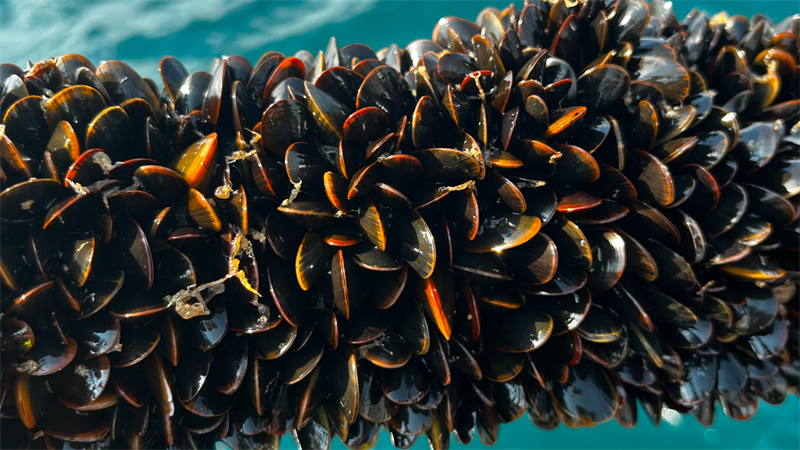
Offshore Shellfish pioneers large-scale offshore mussel farming that actively restores marine ecosystems.
Pescando Transformaciones (Uruguay)
Pescando Transformaciones is a transdisciplinary initiative that facilitates collaboration amongst those working with small-scale fisheries.
RegenerAgri Initiative (Kenya)
RegenerAgri Initiative supports farmers transitioning to regenerative agriculture, with hands-on training, peer-to-peer learning, organic input access, and market linkages.
CORAF Regional Center of Excellence (Senegal)
CORAF develops drought-resistant crop varieties and sustainable farming techniques for dryland environments.
Ruuts (USA & Argentina)
Ruuts scales regenerative ranching and land management practices across Latin America.
Sanitation 360 (Sweden)
Sanitation 360 transforms human urine into a granular fertilizer, with their modular, portable urinal design.
Seafood Souq (United Arab Emirates)
Seafood Souq brings digital traceability to the seafood supply chain, allowing actors to verify origin, comply with global regulations, and make ethically informed decisions.
Soil Capital (Belgium, France & the UK)
Soil Capital operates Europe's first certified carbon payment program, accelerating the transition to regenerative agriculture.
Stephanie Alexander Kitchen Garden Foundation (Australia)
The Stephanie Alexander Kitchen Garden Foundation delivers hands-on growing and food preparation education for children.
Tender Food (USA)
Tender Food uses its patented fiber spinning platform to create a new generation of plant-based meat alternatives.
The Savanna Institute (USA)
The Savanna Institute is an agroforestry initiative bringing trees back to farms across the US Midwest.
ThermoReLEAF (Argentina)
ThermoReLEAF has discovered the process behind heat damage in plants and how to protect against it.
Thriving Foodscapes (Denmark)
Thriving Foodscapes designs urban food environments to increase access to sustainable and healthy foods.
TREE (Training to Expand Eco-agriculture) (USA & Honduras)
TREE runs hands-on regenerative farming training, hosting field schools and supporting farmer-to-farmer mentorship.
Varaha Climate (India)
Varaha Climate enables over 100,000 smallholder farmers to participate in large-scale carbon removal.
Winnow (UK)
Winnow develops AI tools for commercial kitchens to drastically cut food waste and improve profitability.