3 misconceptions about artificial intelligence – AI professors share their views
Press release 22.10.2025
A great deal of money is being invested in artificial intelligence, and expectations for returns are high. But which expectations are realistic, and which are not? VTT Technical Research Centre of Finland’s new AI professors, Arash Hajikhani and Samuel Marchal, set the record straight.
VTT, one of Europe’s leading research organisations, has a long history in artificial intelligence. As early as the 1980s, several dedicated AI research teams were already operating at VTT. Today, AI plays a central role across VTT’s work, helping researchers accelerate innovation and make scientific discovery more efficient.
Building on this strong foundation, VTT’s new AI professors are well-positioned to dispel common myths and explain what artificial intelligence can – and cannot – achieve.
1. AI knows everything (or nothing)
Arash Hajikhani, Research Professor in artificial intelligence and large language models, often encounters polarized opinions: either AI is expected to know everything, or it is dismissed as generating nonsense.
“Neither is true. Everything depends on what AI is being used for,” he explains.
Hajikhani compares AI to fire: you can use it to burn down a house or to cook a steak to perfection – if you’re skilled in cooking and know how to handle fire.
The same goes for technology. There are many ways to build effective AI systems. If used properly, AI can greatly increase efficiency, especially by automating straightforward tasks. Hajikhani himself uses AI to sum up research articles, for example.
AI’s “intelligence” also depends heavily on prompting, meaning the ability to clearly communicate the desired outcome to the system. Vague commands typically produce poor results.
The training data also matters. If AI has not been fed the right information, it cannot provide it to the user.
“Garbage in, garbage out,” Hajikhani sums up.
2. AI takes away jobs
Another common belief is that AI will take away most jobs within just a few years. Samuel Marchal, newly appointed Research Professor of cybersecurity in the AI era, disagrees.
“I don’t believe things will happen as quickly as people think.”
He reminds us that machine learning systems have been under development for over 50 years. It took decades of work before AI became effective in repetitive tasks. Although major leaps have been made in recent years, so-called artificial general intelligence (AGI) is still a long way off.
According to Marchal, expectations are inflated by science fiction movies and other grand visions, with some responsibility lying with the media as well.
“Headlines usually highlight AI’s latest successes. But I can assure you that there are many, many more failed experiments. They just aren’t seen as newsworthy,” he notes.
In Marchal’s own field of cybersecurity, AI works well in areas like detecting phishing attacks, scams and malware. It also helps professionals handle massive amounts of data.
At its best, AI is an excellent assistant for security experts – but it does not replace humans, at least not yet.
3. AI makes everything more efficient
A third misconception is that AI makes everything more efficient and should be applied everywhere. In reality, successful use of AI is far from simple. AI cannot make everything more efficient, nor should it be applied indiscriminately.
For example, many companies have rushed to add AI-powered chatbots to their websites, only to find that the bots do not actually meet their goals.
“If the data isn’t right and the purpose hasn’t been carefully considered, the result will be a failure. Organizations must understand their own operations, and AI must be integrated into company culture,” Hajikhani says.
He emphasizes ethical and responsible use of AI. In systems handling critical information, AI’s operations must be transparent and open to intervention.
Security is particularly important in AI systems used in cybersecurity, Marchal stresses. Researchers often find more benefit in older machine learning methods than in large language models or generative AI, which are still too prone to errors.
In cybersecurity, moderate accuracy is not enough. One mistake can cause serious damage.
“AI without carefully considered security is like handing the keys of an organization to cybercriminals. If systems are built in a rush and the doors are left unlocked, the cost is not only lost data – it also means lost trust, lost money and lost control,” Marchal concludes.
Further information about the experts:
Arash Hajikhani began his position as a research professor at VTT in September 2025. He has previously served as the research team leader in the foresight and data economy research area (2022–2025), as a senior data scientist and project manager (2020–2022), and as a data scientist in the innovations, economy and policy research area (2018–2020). He conducted his PhD in the Software Engineering Department at LUT University, where he also holds the title of adjunct professor, and he has been a visiting scholar at Stanford University.
Samuel Marchal will begin his position as a research professor at VTT in November 2025. He has previously served as the team leader of VTT’s cybersecurity engineering & automation research group (2024–2025), as a postdoctoral researcher and later as a research fellow at Aalto University (2015–2024), and as a senior data scientist at F-Secure/WithSecure (2019–2024). He completed his doctoral research at the University of Luxembourg (2015) on applying machine learning to the detection of phishing attacks and fraudulent websites.
Media material:
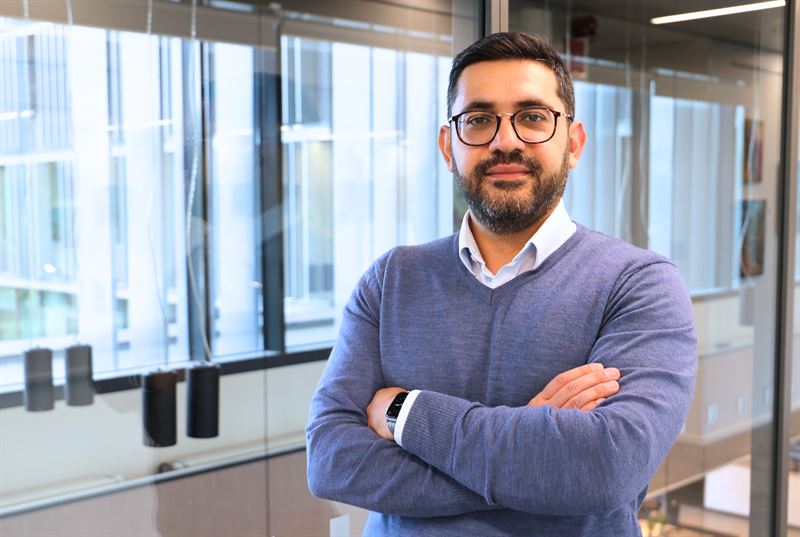
Picture: Arash Hajikhani
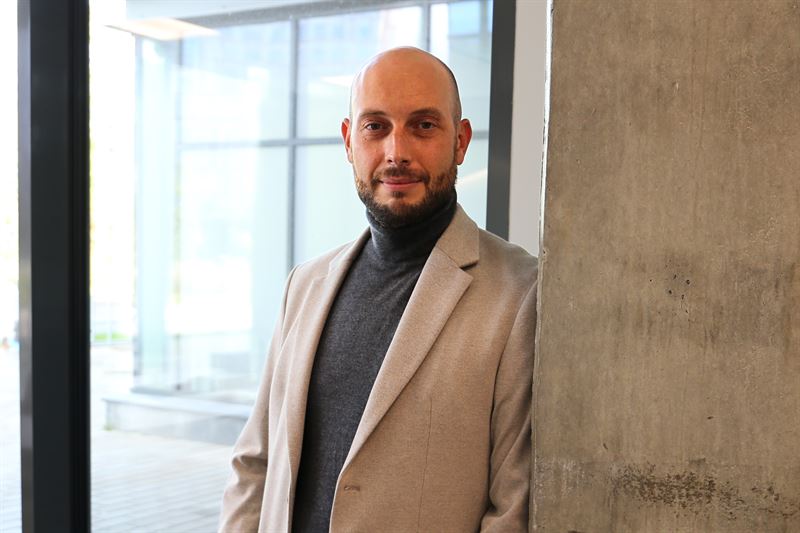
Picture: Samuel Marchal
Further information:
Arash Hajikhani, Research Professor, VTT
arash.hajikhani@vtt.fi, tel. +358409333549
Samuel Marchal, Research Professor, VTT
samuel.marchal@vtt.fi, tel. +358504334884
Further information about VTT:
Kirsi Jaatinen
Communications Manager
+358 20 722 6757, kirsi.jaatinen@vtt.fi
www.vtt.fi
VTT is a visionary research, development and innovation partner. We drive sustainable growth and tackle the biggest global challenges of our time and turn them into growth opportunities. We go beyond the obvious to help the society and companies to grow through technological innovations. We have over 80 years of experience of top-level research and science-based results. VTT is at the sweet spot where innovation and business come together.
VTT – beyond the obvious
www.vttresearch.com, LinkedIn, Facebook, YouTube, Instagram and Bluesky