
Get prepared: current Europe heatwaves are a dress rehearsal
Statement by WHO Regional Director for Europe, Dr Hans Henri P. Kluge
Copenhagen, 30 June 2026
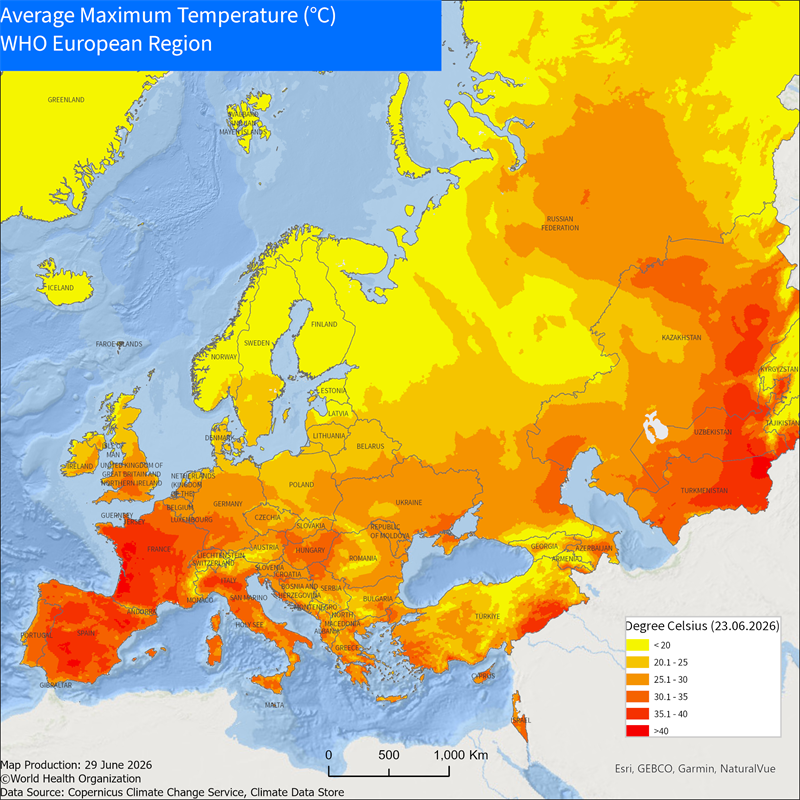
Across Europe right now, people are struggling to sleep. Emergency rooms are filling up. Ambulance services are breaking records. In France, emergency medical calls have risen by up to 50% in some cities. In London, last week saw the highest number of life-threatening emergency calls the ambulance service has ever recorded in a single day. Spain's mortality monitoring system has already estimated more than 300 heat-associated excess deaths in just a few days. Italy reported five deaths in 24 hours.
Europe is warming at more than twice the global average. Heatwaves are no longer one-off freak events. They are recurring crises, and they are getting more frequent, stronger and lasting longer. Every summer we fail to prepare for them is a summer we pay for in lives.
But here’s what gives me some reassurance: prevention works! We know this because we can measure it. Estimates show that heat-related deaths in Europe in 2023 would have been around 80% higher without the adaptation measures already in place. For people aged 80 or above, deaths could have been twice as high. Heat-health action plans, early warnings, cooling spaces, outreach to vulnerable people – these are not bureaucratic exercises. They are saving lives right now – we need more of them, across all of the European Region.
What you can do today
If you do not have air conditioning - and most people in northern Europe don’t - the advice is practical and affordable: Keep blinds and curtains closed during the day to block heat out. Open windows at night when temperatures drop. Drink water before you feel thirsty while avoiding sugary, alcoholic or caffeinated drinks. Avoid the midday sun. And check on older neighbours and relatives. A phone call costs nothing and can save a life. Around 60% of hospital admissions after emergency visits during this heatwave have involved people aged 75 and older. Many of those admissions were preventable.
What cities and governments are doing - and what more is needed
Several countries and cities are showing what preparedness looks like. Barcelona has expanded its network of climate shelters to more than 500 spaces this summer - libraries, civic centres, parks, pharmacies. Paris has activated its welfare-check register for older and vulnerable residents, and restricted public alcohol sales to reduce pressure on emergency services. Italy has introduced restrictions on outdoor work during the hottest hours of the day in some regions, with furlough arrangements so workers do not lose income. These are just a few examples of practical, scalable interventions. Every city in Europe should have a version of them.
Hospitals are also under enormous pressure - not just from the surge in patients, but from the heat itself. Cooling systems failing. Medical equipment malfunctioning. Staff who are sleep-deprived because night-time temperatures are not dropping. Wards described as unfit for purpose.
What WHO/Europe is doing
On Monday 6 July, I will convene national focal points responsible for emergencies, environment and climate change from all WHO States Parties in the European Region for an emergency check-in. There will be one question on the agenda: what did we learn from this heatwave, are we ready for the next one, and how can WHO/Europe help more?
This heatwave is a dress rehearsal. The summers ahead will be harder. More than half of European countries still do not have a comprehensive heat-health action plan in place. That needs to change - and WHO/Europe's newly updated guidance gives every country, region and city the tools to act now.
Follow the WHO/Europe KeepCool campaign: keep out of the heat, keep your home cool, keep your body cool and hydrated, keep in touch with those around you.
The heat is here. The solutions exist. The window to act is now.
ENDS
LINKS
WHO heat-health action plan guidance (second edition)
New WHO guidance helps protect people from extreme heat
Europe lost 200,000 people to heat in just 4 years
CONTACTS
Bhanu Bhatnagar, bbhatnagar@who.int
Press Office, eupress@who.int