
What Trends Will Define the 2026 World Cup: Roundtable
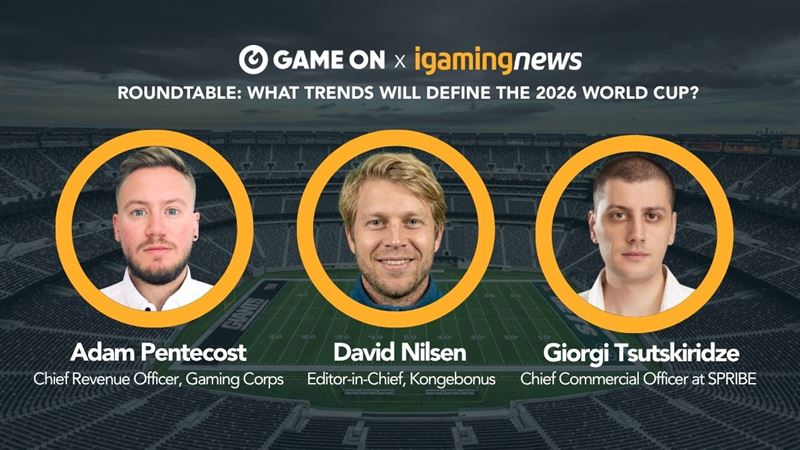
This feature is supported by expert commentary from Adam Pentecost, Chief Revenue Officer at Gaming Corps; David Nilsen, Editor-in-Chief at Kongebonus; and Giorgi Tsutskiridze, Chief Commercial Officer at SPRIBE.
- Adam Pentecost, Chief Revenue Officer, Gaming Corps
- David Nilsen, Editor-in-Chief at Kongebonus
- Giorgi Tsutskiridze, Chief Commercial Officer at SPRIBE
While the World Cup is often viewed through a sports betting lens, its impact spans the wider iGaming ecosystem. This roundtable will discuss how casino and other verticals can capitalise on heightened engagement, and the key trends shaping both sports betting and online gaming during the tournament.
AP: One trend that will continue to stand out is the move away from relying on theme alone. Historically, football-themed slots have struggled to deliver lasting traction. They may attract short-term curiosity during a major tournament, but very few have shown strong lobby performance beyond that window. That suggests the industry has moved on from the idea that simply adding football visuals is enough. Strong mechanics and the right gameplay loop matter far more. At the same time, arcade and instant win formats are becoming increasingly relevant, especially during major sporting events. They are faster, more interactive and better aligned with the way sports audiences behave online, particularly on mobile. On the sports betting side, that same preference for immediacy and frequent engagement will likely shape product demand throughout the tournament.
DN: The biggest trend will be that the whole product gets pulled into the World Cup, not just sportsbook. Football will be the main engine, but the brands that really win will be the ones that keep people engaged around the matches too, with content, live casino, loyalty, community and smart cross-sell. World Cups always bring huge marketing pressure, huge attention and a lot of fun gimmicks to get new people through the door. Betsson Sweden’s old 250 million SEK World Cup campaign is a good example of the kind of big, playful idea that grabs casual users.
For us in Norway, though, the emotional side is what really matters. This is our first World Cup since 1998, so people will come together in a completely different way. At Kongebonus, we expect that national feeling to lift everything around the matches, not just the odds screen.
GT: The 2026 World Cup will see several trends all kick off together at the perfect time.
First, real-time engagement will be key, because players increasingly expect instant, reactive experiences that mirror the dynamic of live sports.
This is where formats like crash games and fast sessions will continue to thrive.
Second, gamification is no longer optional. Missions, leaderboards, and progression systems are what will drive retention across both sportsbook and casino.
Third, personalisation powered by AI will play a defining role, allowing operators to tailor offers, content, and timing to individual player preferences.
On the sportsbook side, micro-betting and in-play betting will dominate, especially among younger audiences.
In terms of customer expectations and habits, what makes the 2026 World Cup different from previous tournaments?
AP: The 2026 World Cup feels different because of both its scale and setting. It is already one of the most anticipated tournaments in years, and the fact it will take place in the US adds another layer of relevance given how important that market has become across the wider industry. There is also a broader North American story at play, with Ontario now well established and Alberta set to open as a newly regulated market on 13 July 2026, just days before the World Cup final. That timing gives the tournament even more commercial significance across the region. There is also a strong emotional pull for older fans who still remember the 1994 World Cup fondly. At the same time, customer behaviour is now faster, more mobile-first and geared towards continuous engagement, creating clear opportunities for mini games, instant win formats and arcade-style products that can fill the gaps between bets and matches.
DN: The big difference is belief. In previous World Cups, we watched more as neutrals. This time we are in it ourselves, and people genuinely feel this team can hurt anyone. That changes the whole mood. We have waited nearly 30 years for this, and with players like Haaland and Ødegaard, plus the wider lift around Norwegian football, the average Norwegian is going to be far more emotionally invested than before. Norway is even being priced by some books around 26.00, which says a lot in itself. We are not being viewed as just happy to be there. We are being viewed as a proper outsider.
That means more first-time bettors, more casual fans joining in, and a lot more betting with the heart as much as the head. This tournament will feel national for us in a way most football events simply do not.
GT: This year’s World Cup will reflect a more digitally native, experience-driven audience than ever before.
Today’s players, especially Gen Y and Gen Z, expect immediacy, simplicity, and entertainment beyond traditional betting. They are less interested in complex odds and more drawn to intuitive, fast-paced formats that deliver instant outcomes. Mobile-first is now the dominant behaviour, with users engaging in short, frequent sessions rather than long, planned ones.
There is also a stronger expectation for seamless navigation between verticals, whether it’s moving from a live match bet into a casino game or participating in a gamified campaign. Of course, trust, transparency, and responsible gaming tools remain important and are becoming increasingly so. Compared to previous tournaments, this World Cup will be less about pure wagering and more about immersive, personalised entertainment experiences built around the tournament.
Prediction markets have become a controversial subject over the last 12 months. What role are they likely to play in the World Cup?
AP: Prediction markets are attracting growing interest, but they are still unlikely to become a core mainstream feature during the World Cup. The biggest reason is regulatory complexity, which makes widespread adoption difficult and creates uncertainty around how these products can be positioned across different markets. That will naturally limit their role compared with more established betting and gaming formats. Even so, there is clearly an appetite for prediction-led experiences, particularly when they are simple, accessible and easy to understand. The opportunity may not be in full-scale prediction markets as such, but in lighter mechanics that borrow from that behaviour, giving players quick, intuitive ways to engage with outcomes and moments around the tournament. For most companies, the priority should be low-friction formats that feel entertaining and easy to enter, rather than overly complex products.
DN: Honestly, I do not think prediction markets will be the real story of this World Cup in Norway. This World Cup will be about regular odds betting, and regular odds betting with our hearts. We have waited nearly 30 years for this moment, so people will want the classic football markets they know. Match odds, goalscorers, Norway specials, group betting, outright paths. That is where the real emotional action will be for us.
You can also feel that belief in Norwegian football more broadly now. Bodø/Glimt’s recent European run has helped with that. UEFA notes they were Europa League semi-finalists in 2025 and reached the Champions League last 16 this season. That kind of run makes ordinary Norwegians feel we can compete with anyone right now.
GT: Prediction markets are an interesting development, but they sit in a complex regulatory and perception space. For the World Cup, they will likely remain a niche rather than a core driver of engagement. While they appeal to certain audiences who enjoy forecasting broader outcomes, they lack the immediacy and entertainment value that most players now expect.
The industry’s focus is shifting toward fast, interactive formats that deliver instant feedback, which is where traditional sportsbook products and new gaming formats outperform prediction markets.
That said, there may be room for hybrid models that incorporate predictive elements into gamified experiences, rather than standalone products. Ultimately, their role will depend heavily on regulatory clarity, but they are unlikely to define the World Cup experience in the way real-time betting and gaming will.
The World Cup attracts a lot of interest from new and casual bettors. How should the industry adapt its products to best engage that audience?
AP: Simplicity has to be the starting point. During the World Cup, a large part of the audience will not be made up of highly experienced sportsbook or casino players, but people engaging more casually because of the event itself. That means products need to feel intuitive from the first interaction, with a low barrier to entry, strong visual clarity and mechanics that are easy to understand. Instant win and arcade-style formats are especially well suited to that audience because they offer quick engagement without requiring a big learning curve. This is also a strong opportunity to build brand loyalty, so the onboarding experience matters. Daily rewards, unlockable challenges and other light-touch engagement tools can help bring people back in a way that feels natural. The companies that focus on the first-time user experience will be best placed to retain attention beyond the tournament.
DN: The answer is to make it simpler and more enjoyable. New users do not want to feel like they need a manual. They want clean match pages, easy markets, fast onboarding and offers they actually understand. But I also think there is a social side to this that matters a lot. People want to be part of something. They want to watch together, react together and feel the buzz around the team.
That is something we think a lot about at Kongebonus. We want to make it more fun for the casual bettor through watch-alongs, streams, live reactions and matchday content, but also help people take sharper decisions in their betting. Simple explainers, clear comparisons, quick insights and content that actually helps without making things feel complicated. That balance is important. Make it fun, but also make it useful.
GT: Engaging new and casual players requires simplifying the experience without losing excitement.
The first step is removing friction. This can be done through providing intuitive UX, quick onboarding, and clear product structures. Casual players are often overwhelmed by complex betting markets, so offering guided experiences, such as curated bets or simplified formats, can make a big difference.
Beyond sportsbook, instant and crash-style games provide an accessible entry point, as they are easy to understand and deliver immediate results. Education is also vital, so providing short tutorials, tooltips, and transparent mechanics can help build confidence. Gamification can further enhance engagement by giving users clear goals and rewards. Most importantly, operators should focus on entertainment rather than pure monetisation, ensuring that first-time experiences are enjoyable, fair, and memorable, which increases the likelihood of long-term retention.
What strategies will separate the companies that truly benefit from the World Cup from those that simply see a temporary spike in activity?
AP: The companies that gain most from the World Cup will be the ones that think beyond a short-term traffic spike and build products or campaigns that connect naturally across multiple verticals. There is a real opportunity to take players from sportsbook into casino, and from slots into arcade or instant win, but that only works when the experience feels joined up. Products that can appeal across two or even three verticals are likely to be especially valuable. Consistency also matters. Keeping the same visual identity, artwork style and overall feel across different products helps reinforce that connection and makes the brand easier to remember. In the end, it comes down to giving players something that genuinely fits what they want during the event, rather than forcing a seasonal overlay onto products that do not match the moment.
DN: The real difference will be whether they understand what kind of traffic this is. A lot of it will be emotional, patriotic and event-driven. That is fantastic in the moment, but it also means you cannot fool yourself into thinking the same level of engagement will continue after the tournament. It will not. It is going to be extremely hard, maybe impossible, to keep that same intensity once the World Cup is over.
So, the smart operators will plan for that from the start. Yes, there will be the usual half-time free spins, cross-sell pushes into casino and all the classic World Cup gimmicks. Some of that will work for acquisition. But the real separator will be whether a company uses the tournament to start building better journeys, better habits and better reasons for people to come back when the football buzz cools down.
GT: The difference between achieving short and long-term success from the World Cup tournament will come down to preparation, integration, and long-term thinking.
Companies that truly benefit will treat the tournament as a strategic growth moment, not just a short-term revenue spike. This means building cohesive experiences across sportsbook, casino, and gamification tools, rather than operating in silos. Data utilisation is another important factor, which is why real-time insights should inform personalised offers and player journeys throughout the tournament.
Strong CRM strategies, including segmentation and lifecycle marketing, will help convert short-term engagement into retention. Infrastructure and scalability are also critical to ensure that peak traffic can be handled without compromising performance. Finally, brand positioning plays a role. Those who create memorable, differentiated experiences during the World Cup will stay top-of-mind long after the final whistle
The World Cup lasts only a few weeks, but its impact can stretch far beyond the tournament itself. How can companies turn short-term engagement into longer-term growth?
AP: Long-term growth comes from using the World Cup as an introduction, not treating it as a one-off sales window. A strong cross-vertical strategy is important here, because the overlap between sportsbook, slots, arcade and instant win is only increasing. If players discover a brand during the tournament, the experience that follows needs to feel consistent enough to keep them exploring. Branding, visual identity and product positioning all play a role in that. Timing is also important, because even a strong product can be missed if it is not surfaced at the right moment. For lesser-known brands in particular, this is a chance to make a lasting first impression. If the product underdelivers, that will be remembered. If the experience feels polished, relevant and enjoyable, players are far more likely to return and to explore the wider portfolio after the tournament ends.
DN: The key is being realistic. Nobody should expect to keep World Cup levels of activity after the tournament. That is not how this works. The smarter goal is simply to hold on to a bit more than you otherwise would have. In this business, even a small uplift in retention after a major event can make a huge difference over time.
That is why I think the campaigns that matter most are the ones that go beyond the World Cup itself. Yes, there will be classic cross-sell trials into casino and similar offers around the matches, and yes, some of that will convert. But if you really want to tie people into the product long term, it has to be more than a World Cup promo. At Kongebonus, we see it as a question of overall experience, timing and relevance. Better follow-up, better content, better reasons to stay. That is where the real long-term value is.
GT: Keeping the ball rolling after the World Cup requires a clear post-tournament strategy.
The first step is capturing and analysing player data during the tournament to understand behaviours, preferences, and engagement patterns.
These insights should feed into personalised retention campaigns very soon after the trophy has been handed to the winners. Seamless transition is also important. Players acquired through sports should be introduced to other verticals, such as casino or instant games, through targeted cross-sell strategies.
Loyalty programmes and ongoing gamification can maintain engagement by giving players reasons to return regularly. Content cadence matters too, which is why operators should continue offering fresh, relevant experiences that replicate the excitement of the World Cup.
Ultimately, long-term growth comes from building habits, not just driving one-off interactions.
Looking to the future, the World Cup takes place every four years. By the time 2030 arrives, which of these trends do you still expect to be popular? And how do you expect customer demands to have evolved by then?
AP: By 2030, cross-selling and multi-vertical play are likely to be even more important than they are today. The lines between product categories are already becoming less rigid, and major global events like the World Cup will continue to accelerate that overlap. Seasonality will also remain a major driver, because tournaments of this scale naturally create concentrated periods of attention and acquisition. What will change most is customer expectation. Players will expect faster access, simpler journeys and a greater degree of personalisation, even if they are only engaging casually. That means operators and suppliers will need strategies that are flexible enough to handle large spikes in traffic without losing quality or clarity. Casual players will still be hugely important during these events, but by 2030 they will expect experiences that feel much more immediate, seamless and tailored to them.
DN: By 2030, I think the biggest shift will be that everything has to feel even simpler for the user. Fewer clicks, clearer offers, better timing and less friction everywhere. Customers will expect a smoother journey from the first piece of content they see to the first bet, to the payment, to whatever comes next. The brands that make complex products feel simple will have a real edge.
I also think prediction markets will be much more part of the conversation by then. They have clearly become a bigger topic globally, and that discussion has started reaching Norway too. But even if that grows, the core point will stay the same. At Kongebonus, we believe the future is about giving users more choice without making the experience more confusing. Simpler products, better content, smarter engagement and a stronger mix of entertainment and decision support. That is where things are going.
GT: By 2030, the core trends we see today - real-time engagement, gamification, and personalisation - will not only persist but become even more sophisticated.
AI will play a deeper role, enabling fully dynamic experiences that adapt in real time to player behaviour. We also expect further mergers between the concepts of gaming, betting, and entertainment, with more immersive and possibly social or community-driven formats being created as a result.
Customer expectations will continue to shift toward speed, simplicity, and relevance. Players will expect platforms to anticipate their needs rather than react to them. At the same time, responsible gaming will become even more central, with smarter tools and stricter standards keeping everything on track and within regulations. Ultimately, the companies that will achieve their goals in 2030 will be those that combine advanced technology with a strong focus on user experience and trust.