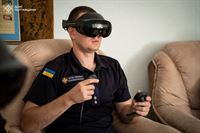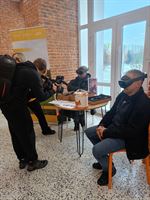
New study from Ukraine demonstrates how mixed reality infrastructure scales mental resilience and recovery in defence and high-stress environments
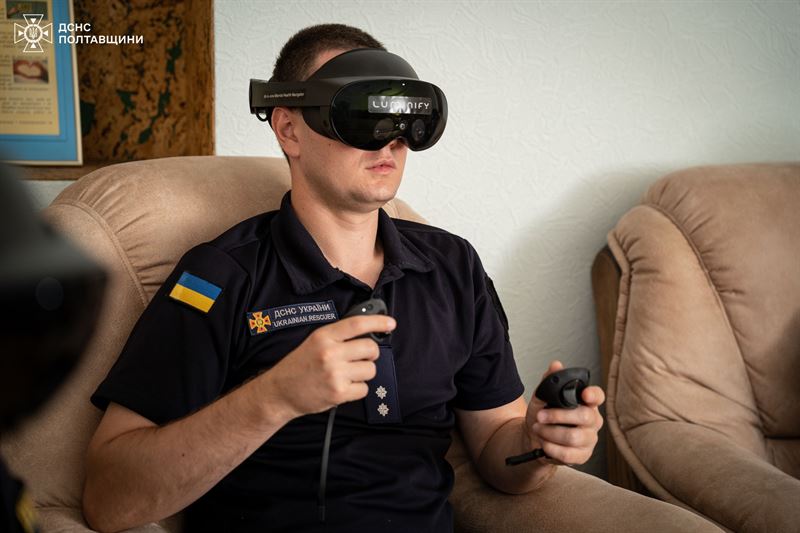
A six-month study of Aspichi’s Luminify across 47 organizations in Ukraine, including hospitals, veteran centers, and mobile teams, shows how immersive mixed reality can be embedded into real care systems to support mental resilience at scale, helping individuals recover, stabilize, and remain functional under sustained pressure.
KYIV, Ukraine (May 26th, 2026) — Aspichi, a mixed reality company developing immersive tools for recovery and resilience, today announced results from a six-month study in Ukraine showing strong real-world uptake of Luminify, its immersive support program, across hospitals, veteran support centers, and mobile care teams operating under wartime strain. The study found that 1,114 patients completed 8,884 sessions using 162 headsets across 47 organizations, suggesting that immersive mixed-reality tools may help overstretched care systems expand access to recovery support, improve engagement, and integrate new forms of emotional regulation and rehabilitation support into daily practice.
Luminify is a mixed-reality-based psychological support program that delivers guided scenarios based on evidence-based approaches, including cognitive behavioral therapy, mindfulness, acceptance and commitment therapy, grounding, breathing, attentional shifting, and trauma-informed design principles. Each session is structured, time-bound, and user-controlled, allowing individuals to engage safely while clinicians maintain oversight.
The findings come as health and recovery systems worldwide face growing pressure to support resilience in conflict-affected, displaced, and resource-constrained settings. WHO estimates that nearly all people affected by emergencies experience psychological distress, while one in five people exposed to war or conflict in the previous decade develops more serious conditions requiring support. At the same time, 2.4 billion people globally live with conditions that may benefit from rehabilitation. Against this backdrop, providers are looking for scalable tools that can extend – not replace – professional support while preserving structure, oversight, and patient safety.
“Health and recovery systems need new ways to deliver structured support without placing even more pressure on already overstretched professionals,” said Viktor Samoilenko, CEO and co-founder of Aspichi. “This study shows that immersive tools can play a serious practical role: helping care teams make support more accessible, repeatable, and easier for people to engage with.”
The study suggests immersive tools can do more than add another piece of technology to an already strained system. In conflict-affected environments, they may help reduce stigma, support emotional regulation, and improve access for people who are hesitant to engage through traditional formats. At the same time, the research makes clear that scale does not come from device distribution alone; it depends on infrastructure, clinician confidence, supervision, and structured integration into real care pathways.
Luminify was most often used as a stabilization tool within broader care processes, not as a replacement for psychotherapy. Clinicians used it to help patients regulate emotions, reduce stress responses, improve focus, and become more ready to engage in further support. In veteran centers and psychosocial programs, practitioners also described it as a lower-barrier entry point into care, particularly for individuals hesitant to engage through traditional talk-based formats.
“One of the most important effects we saw was that the headset helped people take the first step into support,” said a participating practical psychologist at a Ukrainian resilience center. “Clients would hear about it from others and come in saying, ‘I came for the glasses.’ From there, the consultation could begin. In that sense, the tool helped reduce stigma and opened the door to care.”
The study also highlights what is required for responsible scaling. Adoption varied across organizations due to differences in infrastructure, clinician confidence, leadership support, and workflow integration. Sustainable implementation requires reliable infrastructure, clinician training, supervision, care protocols, and standardized outcome tracking, reinforcing that scale depends on system integration rather than standalone deployment.
Beyond the study, Luminify has reached more than 1 million users across more than 6 million sessions, with deployment expanding from 5 clinics in 2023 to 131 clinics in Ukraine in 2025, according to company data. Luminify has been developed in close partnership with the Ukrainian armed forces, shaping the technology based on direct feedback from practitioners in the field. The new implementation study builds on Aspichi’s earlier research involving Ukrainian veterans with stress-related symptoms, where immersive, tech-assisted therapy was shown to reduce anxiety and depression, alongside reported improvements in mood, concentration, and stress resilience.
Aspichi was also recently selected for the PwC Scale Program: Medical Resilience for Civil and Military Use, joining a cohort of 20 companies chosen from innovators across Europe and NATO member states. Through the eight-week program with PwC Belgium, Aspichi will explore how Luminify can scale across healthcare, rehabilitation, and defense-related environments, with the company set to pitch at the program’s Innovation Day on June 24.
###
For additional information:
Media kit with pictures
Elmire Van Tongeren, Chief Marketing Officer
Company Name
+31 6 15078504
elmire.tongeren@aspichi.com
About Aspichi
Aspichi is a Ukraine-founded health technology company building infrastructure for scalable mental resilience, recovery, and rehabilitation. Its system, Luminify, operates as a structured delivery layer within care environments, enabling organizations to provide consistent, repeatable support that helps individuals recover, stabilize, and remain functional under pressure.
Designed for clinical, rehabilitation, and high-stress settings, including defence-related environments, Luminify allows care teams to deliver structured, immersive interventions that extend professional capacity without replacing it.
Born out of Ukraine’s urgent need to support large populations under sustained strain, Aspichi has supported more than 1 million individuals across over 6 million sessions to date. The company is now expanding into the United States, focusing on assisted living, rehabilitation, and other care environments where scalable, system-integrated support is required. For more information, visit luminify.aspichi.com.