New research could change the EU’s view on plastic recycling – quality over quantity
Research conducted by IVL Swedish Environmental Research Institute, TERRA and Swedish Plastic Recycling (Svensk Plaståtervinning) has been published in The International Journal of Life Cycle Assessment. The results reveal major differences between plastic recycling methods used in Europe and could have direct implications for EU legislation on climate and the circular economy.
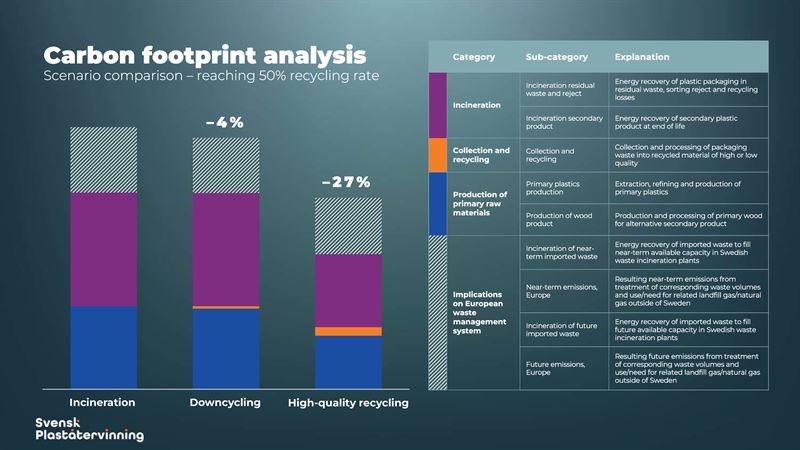
It is not the amount of plastic that is recycled that determines the climate benefit and potential for circularity, but how the recycling is carried out. This is the conclusion of the internationally published study. The research team examined the climate impact of three treatment methods for plastic packaging waste in a Swedish context:
- No recycling (direct incineration with energy recovery)
- Downcycling (recycling with no or minimal sorting)
- High-quality recycling with advanced sorting
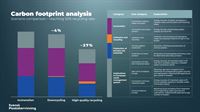
The results show substantial differences in climate impact between the best-performing option (high-quality recycling) and the other two methods (downcycling and incineration). High-quality recycling, which includes advanced sorting, leads to a 27 percent reduction in climate impact compared with no recycling (direct incineration with energy recovery), within the system modelled in the study.
The results also indicate that downcycling reduces climate impact by only 4 percent compared with no recycling.
”The comparison shows that, from a climate perspective, downcycling packaging is almost as bad as incinerating it”, says Linnea Granström, Climate and Environmental Strategist at Swedish Plastic Recycling and co-author of the study.
European countries lack the necessary infrastructure
Achieving high-quality recycling requires advanced sorting, but the infrastructure for this is currently lacking in many parts of Europe. However, the study’s results indicate that such infrastructure is essential in order to reduce the climate impact of plastic packaging and replace the need for primary fossil raw materials.
”The most important factor for the climate benefit of recycling is which raw material the recycled material can replace. With high-quality recycling, primary (virgin) plastic can be replaced, which reduces the amount of new plastic that needs to be produced to meet raw material demand in plastic products”, says Tomas Ekvall, researcher at TERRA and lead author of the study.
Downcycling often results in recycled plastic replacing wood as a raw material instead, which does not reduce society’s need for new plastic production.
With the upcoming EU legislation PPWR (Packaging and Packaging Waste Regulation), there is potential for additional climate benefits in scenarios involving plastic recycling with advanced sorting. This is due to increased requirements for design for recycling and mandatory quotas for recycled content in plastic packaging. These measures enable a larger share of plastic to be recycled at high quality after advanced sorting.
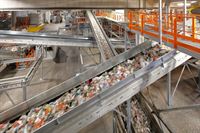
Swedish Plastic Recycling operates a state-of-the-art sorting facility at Site Zero, whose sorting capabilities are reflected in the study’s scenario for advanced sorting and high-quality recycling.
Scientific support for new EU policy
The study is published at a critical moment in the EU’s legislative work on the circular economy. It provides support for the Circular Economy Act and PPWR to include requirements for infrastructure, sorting and recycling quality – not only design and collection.
The focus therefore needs to shift from recycling rates alone to also include recycling quality.
”Upcoming EU legislation is moving in the right direction, but it prioritises quantity over quality, as downcycling is the cheapest option after incineration. If circularity is to increase, policy instruments, targets, investments and support programmes must be based on both quality and climate benefit. This requires higher demands on infrastructure and improved waste management”, says Rickard Jansson, Development Engineer at Swedish Plastic Recycling and co-author of the study.
Towards a more self-sufficient Europe
How waste is managed directly affects Europe’s self-sufficiency and resilience. When materials are incinerated, or lose quality through downcycling processes, the opportunity to circulate the raw material is lost. Access to recycled raw materials decreases and dependence on imports increases.
”If we succeed in transforming recycling operations in Europe towards high-quality recycling with advanced sorting, we can increase the availability of recycled plastic raw materials that can replace primary plastic, strengthen competitiveness and reduce vulnerability. This should be seen as a future investment in Europe’s independence”, says Rickard Jansson.
About the study
The study (“The basket-of-functions approach applied to compare the climate aspects of high-quality mechanical recycling and downcycling of plastics”) is the first of its kind to quantify the climate benefits of different types of plastic recycling across the entire value chain – from raw material extraction and material production to waste management and energy recovery. The expanded analysis reflects how plastic recycling affects multiple societal systems, such as fossil raw material extraction and energy production.
Scenarios analysed:
- Reference scenario: Direct incineration with energy recovery, i.e. no sorting or material recycling
- Downcycling: Mixed plastic waste is mechanically recycled without sorting, for example into railway sleepers (plastic replaces wood in sleepers)
- High-quality material recycling with advanced sorting: Mixed plastic waste is sorted so that each plastic type (polymer fraction) is mechanically recycled separately, based on what is technically and practically feasible today
Data sources:
Actual operational data from the Site Zero sorting facility in Motala, emissions data from existing recycling systems, and emissions data from the life cycle assessment model Waste Management Planning System (WAMPS). Further details are provided in the Supplementary Material.
Further research opportunities:
The model used in this study is also applicable to other research areas within plastic recycling, such as chemical recycling, as well as other environmental aspects including water use, microplastics and hazardous substances.
Additional information about the study
Title: The basket-of-functions approach applied to compare the climate aspects of high-quality mechanical recycling and downcycling of plastics
Published in: The International Journal of Life Cycle Assessment
Authors: Tomas Ekvall (TERRA), Linnea Granström and Rickard Jansson (Swedish Plastic Recycling), Emma Moberg and Tomas Rydberg (IVL Swedish Environmental Research Institute)
Funding: The Foundation for Water and Air Protection Research (SIVL) and Swedish Plastic Recycling
The study is openly available at:
https://link.springer.com/article/10.1007/s11367-025-02543-7
For more information:
Linnea Granström
Environmental Strategist, Swedish Plastic Recycling
Phone:: +46 73 704 85 22
Email: linnea.granstrom@svenskplastatervinning.se
Rickard Jansson
Development Engineer, Swedish Plastic Recycling
Phone: +46 76 799 90 18
Email: rickard.jansson@svenskplastatervinning.se
Tomas Ekvall
Researcher, TERRA
Email: tomas.ekvall@terra.se
Svensk Plaståtervinning AB offers a nationwide system for the collection and circular recycling of plastic packaging in Sweden for businesses with producer responsibility. In the autumn of 2023, the new Site Zero facility in Motala will open, which will be the world's largest and most efficient plastic recycling facility. Site Zero creates the conditions for recycling all plastic packaging from Swedish households, completely circular with the lowest possible climate footprint.
Svensk Plaståtervinning is owned by large parts of the Swedish business community through the Plastics Industry Information Council, the grocery suppliers DLF, Svensk Handel and Svensk Dagligvaruhandel. Together with the three other material companies (Svenska Metallkretsen, Returkartong and Svensk Glasåtervinning), Svensk Plaståtervinning owns FTI (Förpackningsinsamlingen), which handles the collection of plastic packaging. Svensk Plaståtervinning is headquartered in Motala with around 100 employees. More on svenskplastatervinning.se
Taggar: