Wallenius Sol joins Gasum’s FuelEU Maritime pool as compliance generator
Pooling is an easy way to gain regulation compliance and save on penalties, but available capacity may run out before the end of the year
Energy company Gasum and shipping company Wallenius Sol have signed a co-operation agreement whereby Wallenius Sol’s dual fuel vessels join Gasum’s FuelEU Maritime pool as compliance generators. The vessels will generate compliance surplus for the benefit of other vessels by running on bio-LNG.
Wallenius Sol operates regular scheduled services between several ports in northern Finland and Sweden, Germany, the Benelux region and the United Kingdom. The company’s vessels handle trailers, containers and project cargo, for example, for the paper and steel industries.
Wallenius Sol’s customers are now able to enjoy low emission transports for their goods because of the FuelEU Maritime co-operation with Gasum.
“We are very excited that Wallenius Sol has decided to join our FuelEU Maritime pool, as this collaboration enables us to open even more regulation surplus to shipowners at this pivotal point. The window for securing compliance for 2025 is closing rapidly and the available capacity may run out before the year end. Pooling is a brilliant and easy opportunity for all maritime actors to join forces in lowering emissions from the industry together”, says Jacob Granqvist, Vice President, Maritime, Gasum
“We aim to be the natural partner for sustainable sea logistics in the Gulf of Bothnia and across the European continent. Together with Gasum, we are scaling the use of renewable gases at sea. Switching to bio-LNG for our Enabler-class vessels is clear proof that our Roadmap is delivering – and that we are investing in our customers’ climate goals while accelerating the green transition across the Nordics”, Says Rebecca Tagaeus, Chief Sustainability Officer at Wallenius Sol.
Pooling saves costs on penalties
Starting this year, owners of vessels calling at EU ports are required to reduce the carbon intensity of used fuel by two percent. In practice, this means using a certain portion of lower emission biofuels.
Shipowners face a costly penalty if they are not able to meet this requirement. However, joining Gasum’s FuelEU Maritime pooling service is an easy way to comply with the demands of the regulation and save the penalty costs.
Gasum takes full responsibility for managing the pool and provides the right amount of bio-LNG to designated compliance generator vessels within the pool. DNV ensures the pool is in balance at the end of the year.
Liquefied biomethane, bio-LNG, is a fully renewable biofuel with life-cycle emissions that are, on average, 90% lower than traditional fossil fuels such as MGO. Gasum is dedicated to helping its customers navigate the energy transition by continuously increasing the availability of renewable gas.
Read more about Gasum’s FuelEU maritime pooling service
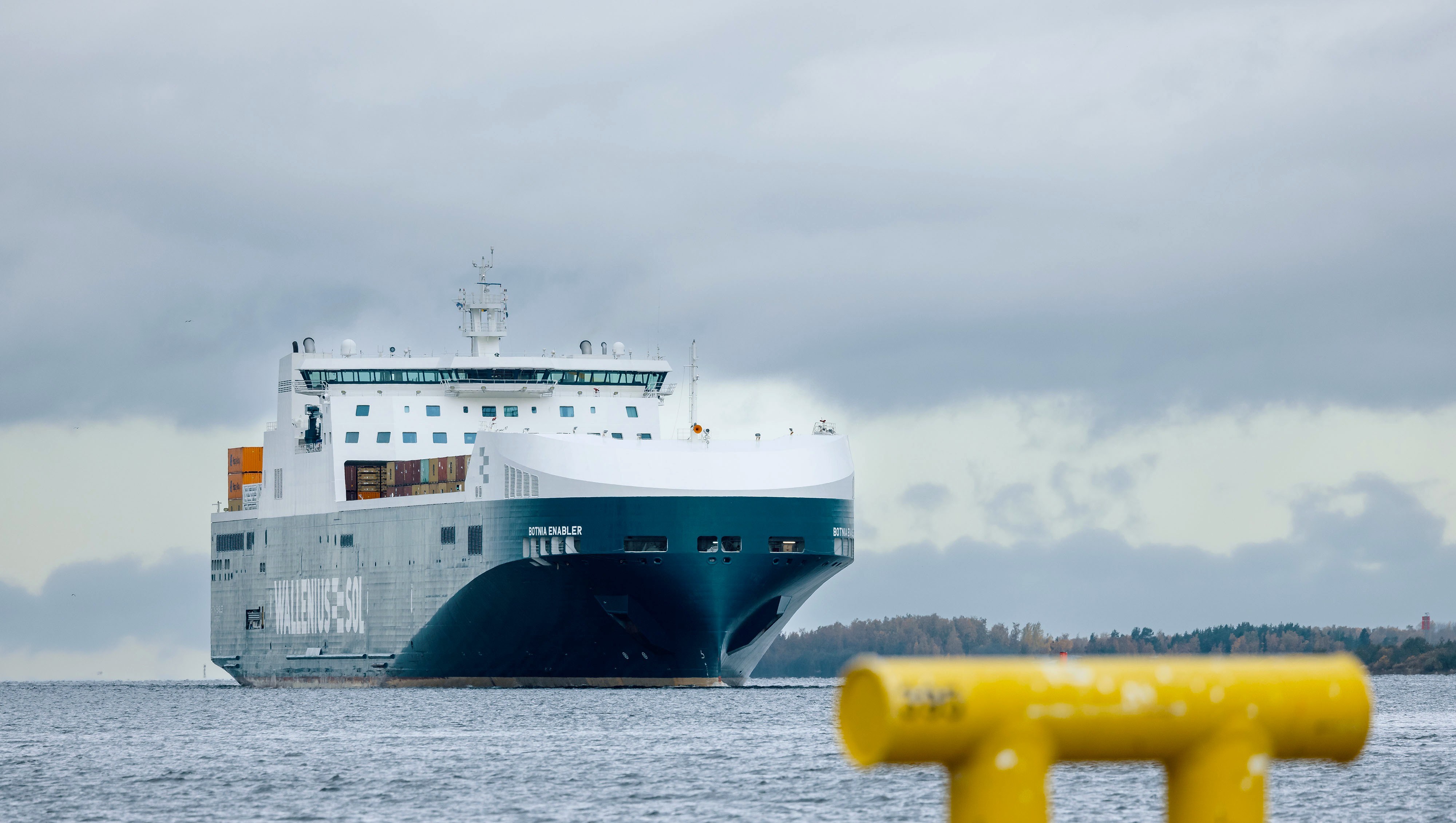
Photo of the vessel Botnia Enabler, courtesy of Wallenius Sol, by Christoffer Björklund
More information:
Jacob Granqvist, Vice President, Maritime, Gasum
+358 40 483 9129, jacob.granqvist@gasum.com
About Gasum
Gasum is a Nordic gas sector and energy market expert. Gasum offers cleaner energy and energy market expert services for industry and for combined heat and power production as well as cleaner fuel solutions for road and maritime transport. The company helps its customers to reduce their own carbon footprint as well as that of their customers. Together with its partners, Gasum promotes development towards a carbon-neutral future on land and at sea. www.gasum.com
About Wallenius Sol
WALLENIUS SOL is an innovative shipping company with its sights set on a sustainable future. WALLENIUS SOL operates regular scheduled services between a large number of ports in northern Finland and Sweden, Germany, the Benelux region and the United Kingdom. Its Climate Roadmap outlines stepwise technical and operational improvements, the introduction of renewable fuels (2023–2026), 100% renewable operations by 2035, and a long-term goal of no harmful impact by 2045. www.wallenius-sol.com
Tags: