
About Us
Axfoundation is an independent, non-profit organization developing practical solutions to complex sustainability challenges within future food and materials. Believing strongly in business as a driving force for change and working in broad collaboration with more than 300 partners, Axfoundation tackles the systems connected to the things we buy, the food we eat, and the resources we use. Torsåker Farm is Axfoundation’s development center, where researchers and practitioners test, refine, and scale solutions to accelerate the transition to sustainable food and material systems. Founded in 1993 by Antonia Ax:son Johnson, Axfoundation is driven by the motto Act to inspire & Inspire to act. www.axfoundation.se/en
Contacts
Media Relations
+46 730 87 15 70
linda.andersson@axfoundation.se

Secretary-General
+46 (0)76-145 28 20
maria.smith@axfoundation.se
Programme Director, Future Materials
+46 (0)76 140 14 75
hanna.hobohm.skoog@axfoundation.se
Programme Director, Future Food
+46 (0)70 950 35 35
madeleine.morner@axfoundation.se
Head of Operations, Torsåker Farm
+46 (0)73 990 77 79
anna.henning.moberg@axfoundation.se
Quotes
The future of sustainable design cannot be built on polyester. A new generation of bio-based materials is emerging, opening entirely new possibilities for how fashion, products, and interiors can be designed and made.
I am because we are, we become because nature provides. SAKA Sneaker and Owasu coat transforms what is overlooked into everyday usable items, reminding us that every material, every being, and every step belongs to a greater whole,
We are living through a profound industrial and material transition. The ways we produce, extract resources, and build societies are changing rapidly. If future materials are to make a real impact, they must not only be developed. They must become visible, understandable, and culturally relevant.
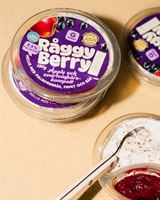
Almost everyone would benefit from eating more whole grains, and hydrothermal treatment helps the grain release its nutrients, making it easier for the body to absorb important minerals such as iron. With Råggyberry, we show how research and collaboration can translate into better everyday food.
Through decades of research, we have refined a traditional method that significantly improves how the body utilizes minerals from grains such as rye, barley, and wheat. This strengthens the nutritional value of plant-based foods and their role in future diets.
We want to make it easier for more people to eat healthy, great-tasting food. Together with Generation Pep, we aim to support better eating habits among children and young people. Råggyberry shows how innovation can go all the way to the shelf, making a nutritious snack accessible to many.
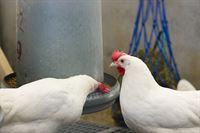
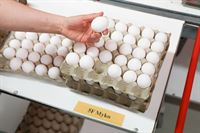
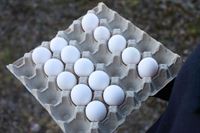
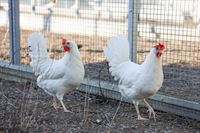
We have already proven that fish can be raised on feed containing Swedish circular proteins derived from forestry, marine, and food industry side streams. Now we are taking the next step and demonstrating that the same approach works for laying hens.
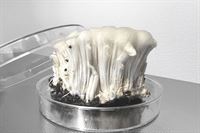
The mycoprotein is a high-quality ingredient with good nutritional value and digestibility. We are now evaluating its effects on animal health and performance, and it has strong potential as a domestically produced protein source.
Developing soy-free feed for laying hens aligns with our ambition to continuously evaluate new raw materials that can strengthen Swedish feed production. When ingredients like this show strong results both nutritionally and environmentally, it is natural for us to help scale them.
With this technology, we can produce protein using very little land and with a significantly lower climate footprint than soy. This creates opportunities for a new domestic protein industry and reduced dependence on imports.
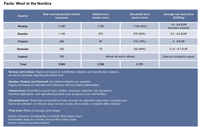
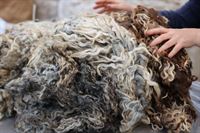
There is a persistent myth that Nordic wool is low quality, but the real problem is gaps in the system. We lack shared ways to classify and handle wool across the region, so large volumes never enter the value chain. By matching the right wool with the right product, we can unlock the value of an existing bio-based resource.
Our analysis shows that there is substantial wool with strong industrial potential, but there is no efficient value chain that can make Nordic wool competitive. The fragmented structure across the region makes it difficult to reduce costs and achieve scale. As a result, despite clear business opportunities, both economic value and a long tradition of regional wool use are being lost.
We now need to take a real wool leap in the Nordics and create the conditions for a shared market. This requires policy instruments such as wool agreements that compensate sheep farmers for all wool, a common Nordic wool standard where the Swedish standard can serve as a foundation, and investments in infrastructure to remove bottlenecks.
We are building practical solutions to collect and make Nordic wool available at scale. Within a year, the full textile value chain will be in place. Actors in textiles, construction, interiors, and technical applications who want to use Nordic wool are welcome to get in touch.
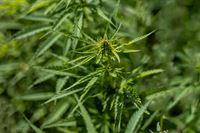
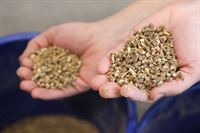
Hemp has many advantages, yet it is still cultivated on very small areas in Sweden. One key reason is that the market for Swedish hemp seed as a food ingredient has been limited. The hemp seed semla is a concrete example of how demand can be created through real consumer products.
To demonstrate the crop’s potential, we wanted to develop a product that fits into existing consumer habits. The mild, nutty flavor of hemp seed is close to that of almonds, making it suitable for a wide range of foods – from granola to traditional baked goods like the semla.
At Urban Deli, we like to test new innovations and explore how they can work in familiar foods. This idea from Axfoundation – using hemp seed paste in the classic semla – is a good example of how small changes can point to what future food might look like, without compromising on quality or the consumer experience.
Today there is a lot of focus on producing more food, but an equally important challenge is making better use of what we already produce. Broccoli leaves are a clear example of a nutritious resource that is left unused today, representing a significant loss for both human health and the environment.
Creating more from less is part of our DNA and runs through all of our product development. At IKEA, we want to increase access to plant-based food as part of a varied diet, and this initiative allows us to offer an affordable soup made from broccoli leaves that tastes good and does good.
Swedish sheep farmers have faced the same challenge as farmers across Europe: how do you find a market for wool of different qualities and quantities? A shared, type-based language has been a crucial missing piece. With a few adjustments, the Swedish classification system could scale across borders. This is how we build European volume from diverse local supply.
The strength of the Swedish system is that it classifies how the fibre behaves and what it can become, not the breed. That’s why it also can work in a European context, The system lets buyers specify exactly what they need and allows us to match supply from many farms.
Our common vision has been zero-waste of Swedish wool. By uniting actors across the value chain, we have shown that the Swedish Wool Standard is a hands-on tool that already works in practice. With its clear European fit, it could help convert underused wool across Europe into higher-value products, supporting rural incomes, circularity, and regional resilience.
Together we have proven that it is possible to produce feed at industrial scale using Swedish side streams, reducing environmental impact and strengthening national food security, without compromising animal health or taste. This is the beginning of a major transition.
Circular feed solutions for farmed fish perform just as well as conventional feeds. The feed contains ingredients more natural for fish to eat, which benefits fish health, the environment, and the quality of the final product. The hope is to see equally good results for pigs and poultry.
From a taste perspective we are very satisfied and customer demand is already strong. As fish farmers, it is meaningful to contribute to a solution that works for both us and the environment.
Iron deficiency is common, especially among young women. We believe in boosting everyday foods with blood, which is rich in absorbable iron – but it must be foods people actually want to eat.
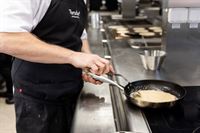
Blood behaves much like eggs and coagulates with heat. In our experiments we also found that it gives chocolate a deeper, richer flavor. As a bonus, it masks the dark coloring of blood that can otherwise turn foods pitch-black. Pancakes with blood instead of eggs work fine too, but people aren’t used to eating black pancakes.
With Pressbyrån PBX we want to explore sustainable ways forward for future on-the-go products. Through our collaboration with Axfoundation, we want to show how food waste can be transformed into a delicious fika item that also addresses a pressing public health issue. The Blood Brownie is exactly the kind of innovation we want to pilot at PBX.
Swedish wool is such a high-quality material and a delight for me as a designer to work with. It makes the creation process rewarding – knitting, dying, draping, cleaning and eventually preserving for a long time to come. Knowing that the wool comes from our own sheep here in Sweden adds another dimension to the process, especially since this valuable material previously has been discarded.
Fashion’s future depends on bold new material stories – and Swedish wool holds incredible, untapped potential. Through the Swedish Wool Initiative, we’re teaming up with designers across industries, from fashion to furniture, with one clear goal: ensuring no Swedish wool goes to waste.
We are aiming for a systemic shift, and now there is large-scale production of Swedish legume products that are tasty and do not require long transports. This is also a crucial step for Sweden’s food preparedness.
Thanks to this collaboration, professional kitchens can now purchase fully Swedish-grown and processed legumes at a price that allows them to use them daily.
It is incredibly inspiring to develop delicious dishes from a raw ingredient with such significant health and environmental benefits. For public kitchens, which have both climate goals to achieve and Swedish dietary guidelines to follow, these products are a perfect fit.
Legumes are climate-smart and rich in protein and fiber. Now, the industry and the market need to recognize the added value of Swedish-grown and Swedish-produced legumes.
We aim to create conditions for the Swedish industry to easily access high-quality and competitive Swedish wool while finding efficient ways to manage logistics so that sheep farmers and shearers can receive a fair price for their wool.
What we do in CircSolar is to develop a proposal for a national solution that benefits the entire system and is based on the latest research from KTH. Creating systemic change requires us to include multiple perspectives, such as infrastructure, technology, business models, and policy, but also to involve a variety of stakeholders. This is not something that either politics or a single actor can solve alone; it requires broad collaboration.
Given the significant growth and interest in solar energy, it is important to think about the next step, what will happen in the future when many solar panels have reached end-of-life. We initiated this project as we see a big opportunity for the entire solar industry to become circular.
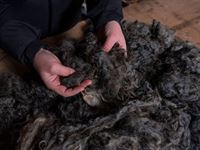
This is a prime example of innovation bolstering sustainable textile production. However, such strides wouldn't be possible without uniting the entire value chain, from sheep farms to industry. By aligning Swedish wool processing with industrial needs, we pave the way for sustainable products across various sectors, particularly fashion.
It's a massive waste of resources to discard Swedish wool simply because it contains excess straw residue. Klippan Yllefabrik has found a solution by combing the wool and removing these plant parts, a step towards a sustainable fashion industry.