
Gasum starts an expansion project at Riihimäki biogas plant
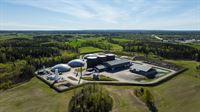
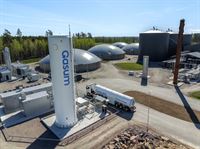
 To enhance production efficiency, Gasum’s Riihimäki biogas plant in Finland is undergoing a significant conversion focused on the treatment of the digestate. The project demonstrates Gasum’s commitment to increasing the production of biogas to bring more renewable energy to the market and at the same time promoting the use of recycled nutrients.Nordic energy company Gasum has decided to invest EUR 7.5 million in a project aimed at expanding and enhancing the current biogas plant in Riihimäki, Finland. Operational since 2016, the plant contributes around 45 gigawatt hours (GWh) of biomethane
 Gasum has decided to invest in a new biogas plant in Borlänge, Sweden. The investment decision is the next step in Gasum’s plan to build five large-scale biogas plants in Sweden. It also promotes Gasum’s strategic goal of increasing Nordic biogas availability significantly in coming years.Gasum continues its plan to increase the availability of biogas by investing over 62 million euros in the construction of a biogas plant in Borlänge, Sweden. The project has been granted a subsidy of 15 million euros from the Swedish Environmental Protection Agency’s Klimatklivet investment program.
 Nordic energy company Gasum is expanding its biogas portfolio by acquiring two thirds of the shares in Swedish company Liquidgas Biofuel Genesis AB. Liquidgas Biofuel Genesis owns and operates a biogas upgrading plant in the city of Helsinborg in southern Sweden.The plant’s other owner with one third of the shares is Nordvästra Skånes Renhållningsbolag AB (NSR), the regional waste management company. NSR has leased a biogas plant to Biond AB who produces raw biogas from the biodegradable waste it collects from households and industries in the area and then the raw biogas is sold to
 Gasum’s next new biogas plant in Götene, Sweden, received final construction permits at the end of January. For Gasum the Götene plant marks the beginning of a string of investments into new biogas production in accordance with the company’s new strategy.After a careful and thorough planning and permit process, Gasum is starting the construction work on its latest biogas plant project in the Swedish community of Götene. The plant will be producing 120 gigawatt hours (GWh) worth of liquefied biogas or LBG per year from early 2025 onwards.
Biogas is a fully renewable and climate friendly
Gasum’s next new biogas plant in Götene, Sweden, received final construction permits at the end of January. For Gasum the Götene plant marks the beginning of a string of investments into new biogas production in accordance with the company’s new strategy.After a careful and thorough planning and permit process, Gasum is starting the construction work on its latest biogas plant project in the Swedish community of Götene. The plant will be producing 120 gigawatt hours (GWh) worth of liquefied biogas or LBG per year from early 2025 onwards.
Biogas is a fully renewable and climate friendly
 Gasum is launching an open innovation competition together with the BioEconomy Business Accelerator BioPaavo by JAMK University of Applied Sciences and growth company consultancy Kasvu Open. We’re looking for solutions and partners to utilize the biogenic carbon dioxide generated as a side stream from the biogas upgrading process in Gasum’s biogas plants in Finland and Sweden.Gasum currently operates a network of nine biogas plants and two upgrading plants in Finland as well as seven biogas plants in Sweden. In addition, Gasum is developing several biogas plant projects in the Nordic
 There are around 2,000 cargo ships with an estimated 25,000 seafarers sailing on the Baltic Sea at any given time. The greywater and sewage generated on these vessels can be legally discharged into the Baltic Sea. How could this wastewater be used in the circular economy? How much renewable biogas could be produced from ship-generated wastewater? Gasum aims to determine the volume of wastewater ending up in the Baltic Sea and to study the potential to use it in biogas production. Under its Baltic Sea Commitment, Gasum is participating in the BSAG Ship Waste Action, which began in last year
 Tamro’s logistics are driven by climate goals and legislation governing the transport of medicines and health products. With Tamro’s partner Post Nord’s biogas-powered vehicles, transport is safe, cost-effective and climate friendly.Some of the transports of Tamro, Finland’s leading medicines and health and wellbeing products distributor and service provider, reach customers with the help of Gasum biogas. Since Tamro’s customers can be found across Finland from large cities and built-up areas to the smallest localities, many transport kilometers are clocked up each week. Logistics are a
 On Friday 17[th] September, the Swedish government announced a biogas production investment support of 500 MSEK by 2022, followed by 700 MSEK 2023-2024 is proposed in the autumn budget this year. It is suggested that the monetary support will continue yearly until 2040.Arla in Sweden has now together with Gasum decided to expand the current partnership that will benefit the biogas production and use in Sweden the following years. In essence, the partnership includes collecting manure in order to produce biogas and bio-fertilizer. In the end, this means more biogas to the traffic segment.
 Gasum is developing new concepts to recover and recycle the nutrients in wastewater sludges.Biogas technology has a key role in recycling the nutrients in sludges and in the production of renewable traffic fuel as part of energy-efficient sludge processing. The processing of wastewater sludge and recovery of nutrients in concentrated, high quality forms has been an active subject of research in Finland and globally in recent years. Advanced processing methods often call for major investments, which justifies centralized processing.
The two-year JÄRKKI - Centralized recycling of nutrients
Gasum is developing new concepts to recover and recycle the nutrients in wastewater sludges.Biogas technology has a key role in recycling the nutrients in sludges and in the production of renewable traffic fuel as part of energy-efficient sludge processing. The processing of wastewater sludge and recovery of nutrients in concentrated, high quality forms has been an active subject of research in Finland and globally in recent years. Advanced processing methods often call for major investments, which justifies centralized processing.
The two-year JÄRKKI - Centralized recycling of nutrients
 Gasum is working with HKScan on plans to switch to manure-based feedstock at the Huittinen biogas plant in Finland. The plant would use mainly local pig and cattle manure to produce biogas. As one of HKScan’s contract partners, contract pig meat producer Emomylly Oy has also committed to the project.Gasum and HKScan are together planning to convert Gasum’s existing biogas plant in Huittinen to an industrial-scale manure plant. The proposed plant would be Finland’s first industrial scale biogas plant using manure as its main feedstock. The plant would utilize 60,000 tonnes of various
 In future, biowaste from residents in Rovaniemi, Ranua and Pello will be turned into renewable Finnish biogas and recycled nutrients at Gasum’s biogas plant in Oulu. A contract between energy company Gasum and municipal waste management company Napapiirin Residuum Oy marks a new step in the regional circular economy in Northern Finland. In future, residents’ biowaste will be recycled into a fuel for the tanks of gas vehicles."Municipalities and municipal waste management companies have an important role in promoting the production of Finnish biogas and transport emission reductions. At the
 The Biogas Market Investigation’s proposals that were submitted to the Swedish Government December 18, would ensure competitive conditions for biogas produced in Sweden and a growing demand for biogas. This is the assessment of the energy company Gasum, which owns a total of 13 biogas production plants in the Nordics.Biogas producers in Sweden have long experienced a distorted competitive playing field compared to Denmark, where producers enjoy extensive production support. At the same time, growing amounts of biogas imported from Denmark have had positive effects since the use of biogas in
 Gasum’s Lohja biogas plant project is moving ahead as progress is made in design and procurement. To be constructed in conjunction with the Lohja Munkkaa waste management center, the plant will process an annual total of 60,000 tonnes of biowaste. The plant is expected to produce more than 40 GWh of biogas and 50,000 tonnes of organic fertilizers per year. The commissioning of the plant is scheduled for 2020.The project will enhance the growth of the Finnish biogas market and strongly promote the transport fuel use of biogas. Project construction work is due to begin in April and be
 The Finnish dairy manufacturer Valio’s first biogas-fueled delivery vehicle was taken into service in the Helsinki Metropolitan Area in September. Valio also takes part in biogas production by supplying waste generated in food production to Gasum’s biogas plants.For many years, Valio has been testing a variety of vehicles using environmentally friendly fuels. The biogas pilot started this autumn was inspired by Valio’s circular economy thinking where the aim is to recover the waste generated in dairy production. In addition to taking part in biogas production, Valio is also introducing a